Business Strategy
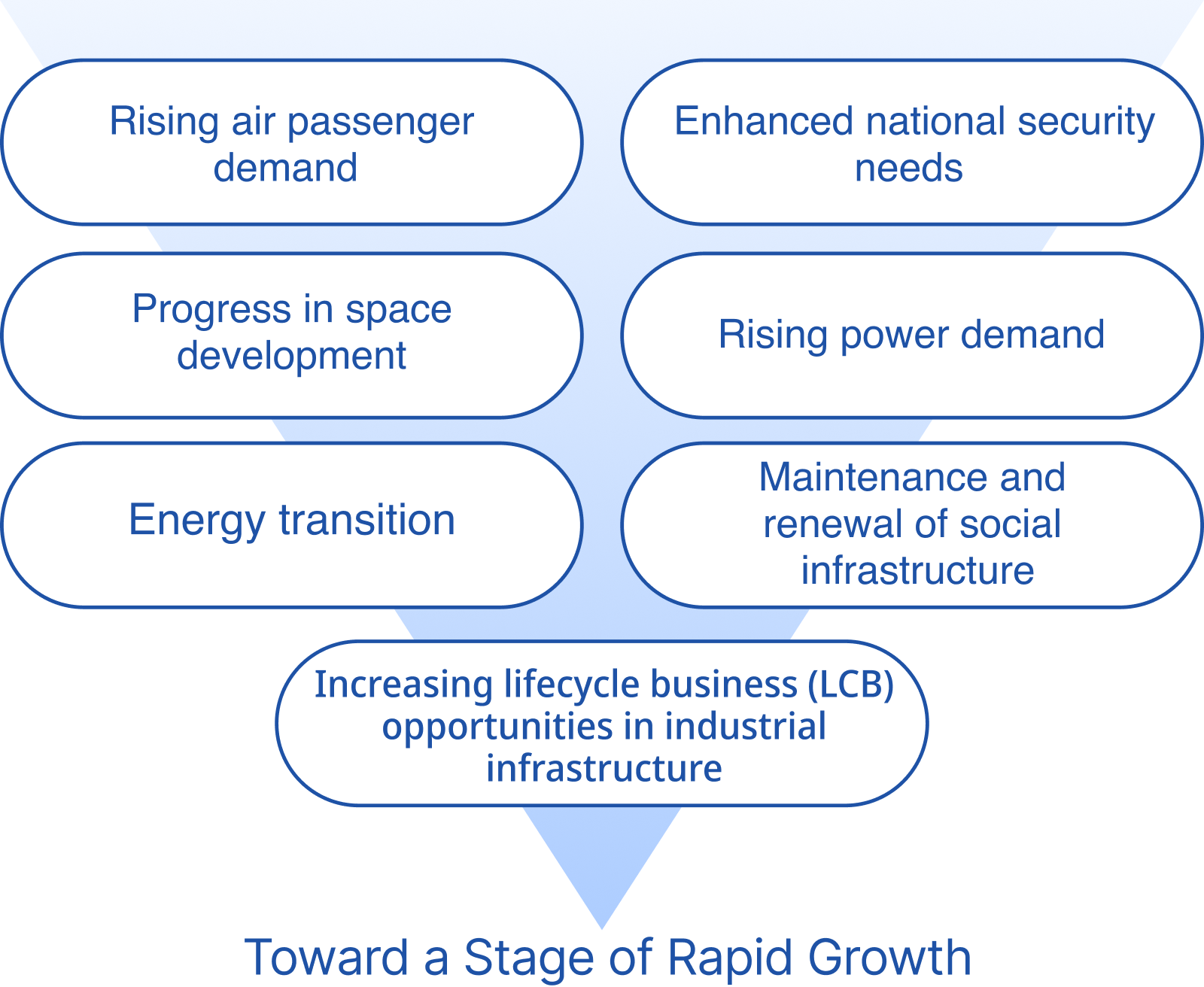
Business opportunities surrounding the IHI Group are expanding significantly as society and industries change. Specifically, the Group expects growth opportunities in the following seven areas.
Broadening Business Opportunities
Businesses in Which IHI Operates
-
Civil Aero Engine Business

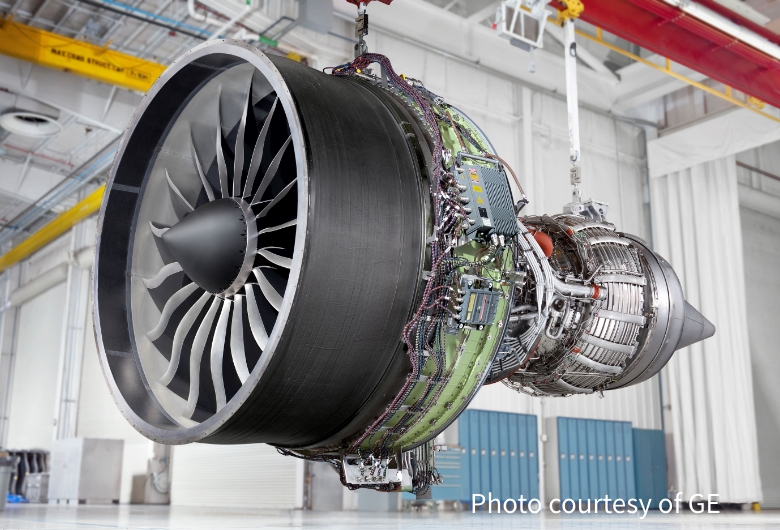
With the continued growth in air passenger demand, the aircraft and aero engine markets are expected to achieve medium- to long-term growth. Through the international joint development of civil aero engines and its lifecycle business, the IHI Group will capture these growth opportunities.
Market Environment
The global civil aviation market is expected to achieve stable medium- to long-term growth, driven by expanding demand for air travel. As of 2025, approximately 26,000 aircraft are in operation worldwide, and this number is projected to increase to approximately 40,000 by 2045. Because aircraft remain in service for 20 to 30 years or longer after they are introduced, the engine market, which supports these aircraft throughout their operational lives, is also positioned as a long-term growth industry.
Jet Passenger Aircraft Demand Forecast
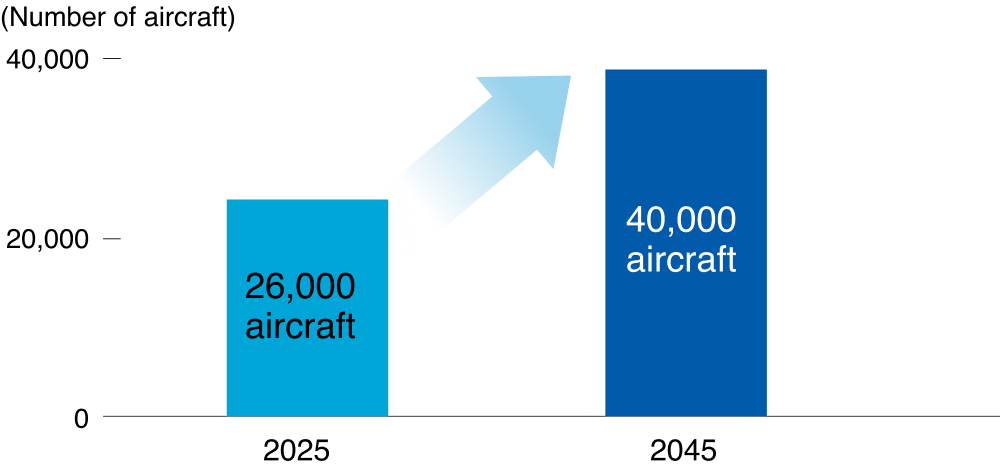
Created by IHI based on Market Forecast for Commercial Aircraft 2026–2045 published by the Japan Aircraft Development Corporation. The civil aero engine business requires substantial investment and advanced technologies for product development. As a result, it is standard practice for the OEM (Original Equipment Manufacturer) leading the engine development program to form an international partnership, sharing risks and responsibilities with partner companies for development and production. The major engine modules that determine engine performance and reliability are undertaken by a small number of globally capable partner companies with the necessary production capacity and technological expertise.
Industry Structure of the Civil Aero Engine Business
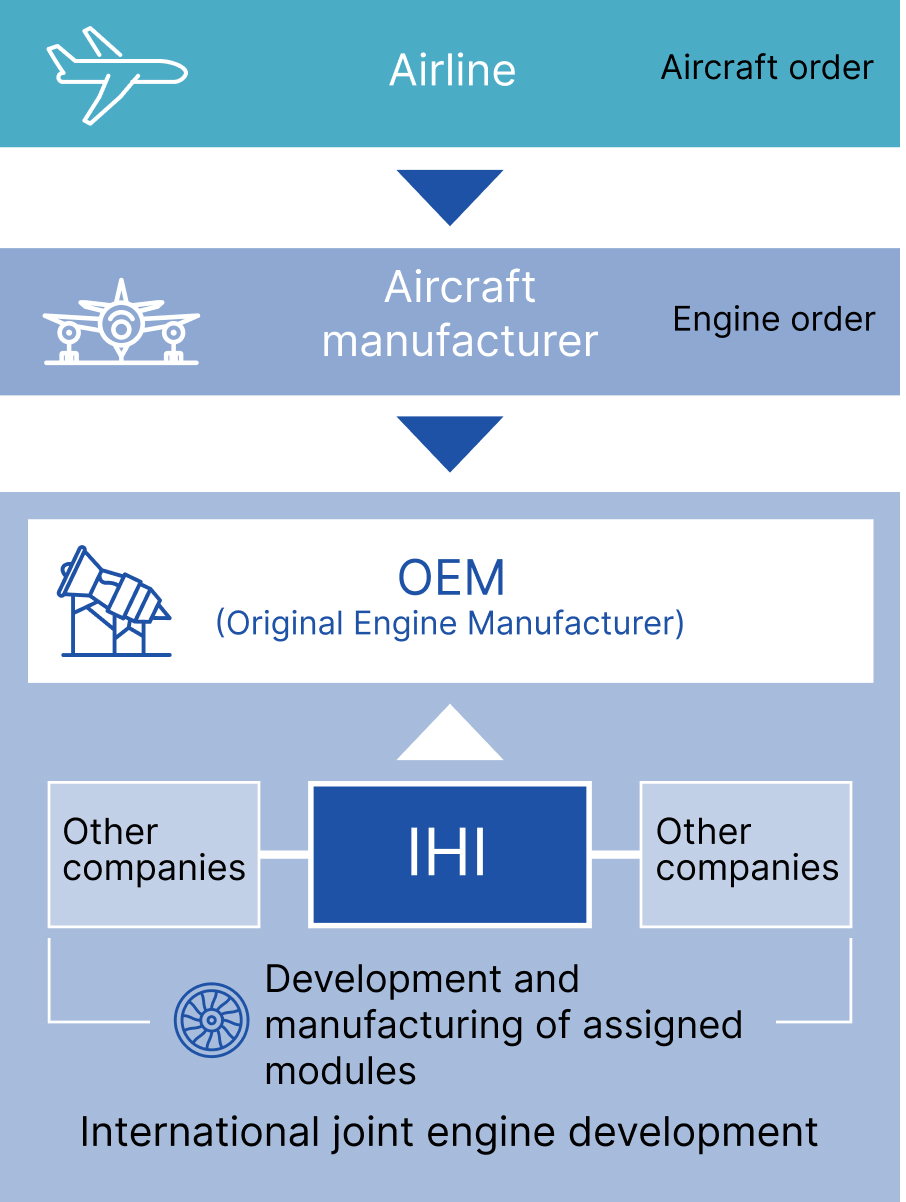
© IHI Corporation All Rights Reserved. Furthermore, after an aircraft enters service, the aero engine requires regular maintenance, repair, and overhaul (MRO). The aircraft aftermarket, centered on these MRO services and the supply of spare parts, is expected to generate stable demand in line with increases in the number of aircraft in operation and flight hours. Entry into this market is limited to certified providers capable of ensuring safety, reliability, and other required standards.
In this way, the industry is structured to deliver high added value throughout the entire lifecycle, from development and manufacturing to the aftermarket, while maintaining commercial viability.Business Strategy
The IHI Group’s aero engine business began with supplying engines for Japan’s domestic defense sector. It built its business foundation through licensed production of engines developed in Europe and the United States, as well as the development of its own domestically produced engines, before later expanding into the civil aero engine market. Since then, the Group has continued to strengthen this foundation by participating in the international joint development programs for a wide range of civil aero engines. The Group’s sustained competitive advantage in this business does not stem solely from strengths in individual advanced technologies or specific products. Rather, it has been established through the long-term, comprehensive accumulation and continuous evolution of multiple management resources, including technology, human capital, and business management capabilities.
Civil Aero Engine Business: Process for Strengthening Competitive Advantage
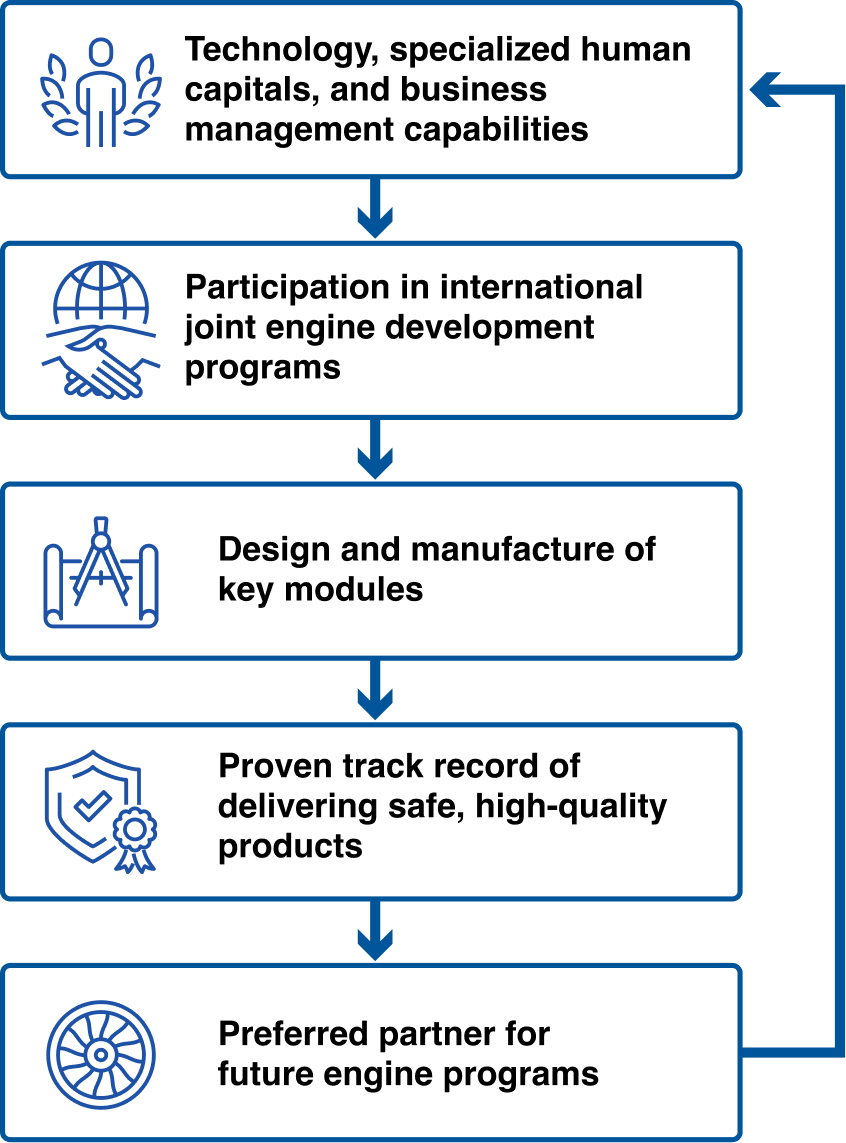
Aero engines must operate under extreme conditions of high temperature, high pressure, and high rotational speed in order to generate powerful propulsion. This requires the sophisticated integration of a wide range of technologies into a single system, including aerodynamics, combustion, materials, structures, cooling, and control. The Group has participated in numerous international joint engine development programs as a partner responsible for the design and manufacture of critical engine modules that have a significant impact on engine performance, durability, and reliability. This ability to provide value based on a deep understanding of the overall engine system and its operating environment is what makes the Group a trusted development partner, rather than merely a component supplier.
Furthermore, ensuring the safety and reliability of aero engines requires the ability to manufacture them with consistently high quality. The Group has established a monozukuri foundation, which means a comprehensive manufacturing foundation, as one of its core competitive strengths. It encompasses a broad range of capabilities, including forging, casting, and composite molding technology; processing technologies such as machining, joining, and surface treatment; and the expertise required to integrate and assure manufacturing processes, including process design, non-destructive inspection, and quality control. This integrated capability enables the Group to reliably supply technologically advanced engine components, including major structural parts, rotating components, and high-temperature-resistant parts.Advanced Technologies- Propulsion-related technologies (aerodynamics, combustion, materials, structures, cooling, and control)
- Formed and fabricated materials technologies (forging, casting, and composite molding)
- Processing technologies (machining, joining, and surface treatment)
As demands for improved fuel efficiency and reduced environmental impact continue to grow, weight reduction and heat-resistant technologies have become critical areas of competition for next-generation engines. Leveraging a strong technological foundation, the IHI Group is able to integrate the development of materials, structures, manufacturing processes, and quality assurance—including in the fields of composite materials and next-generation heat-resistant materials—thereby contributing to improved overall engine performance. The Group also takes a medium- to long-term perspective on technologies related to composite materials and next-generation heat-resistant materials and has continuously and strategically filed patent applications for more than 20 years. In particular, it has established a patent portfolio covering material properties, structural design, manufacturing processes, and quality assurance, thereby strengthening the protection of the technological foundation described above.
The Group's human capital and organizational capabilities have sustained these technological strengths over the long term. In the civil aero engine business, supply and maintenance support must be provided continuously for decades after an engine enters service. The IHI Group has cultivated specialized talent who understand the entire engine program, including design, manufacturing, MRO, procurement, and quality and schedule management, and who are capable of handling certification as well as technical discussions with OEMs. As this expertise is shared and passed on throughout the organization, it forms the foundation for maintaining competitiveness across generations.Maximizing Opportunities- Strengthen the lifecycle business
- Participate in new engine programs
Minimizing Risks- Strengthen the quality certification system
- Strengthen risk management
A defining characteristic of the civil aero engine business is that it extends beyond supplying new engine hardware to encompass services throughout engines’ long operational lives. Engines typically remain in service for more than 20 years, generating ongoing business opportunities in maintenance, repair, and parts replacement. The IHI Group collectively refers to these business opportunities as its “lifecycle business”.
In recent years, the IHI Group has recognized the lifecycle business as an important business opportunity and has worked to strengthen its MRO operations and spare parts supply capabilities. Through maintenance facilities equipped with state-of-the-art equipment and efficient maintenance systems leveraging digital technologies, the Group will establish a stable and highly profitable business model.Revenue Model: Civil Aero Engine Business
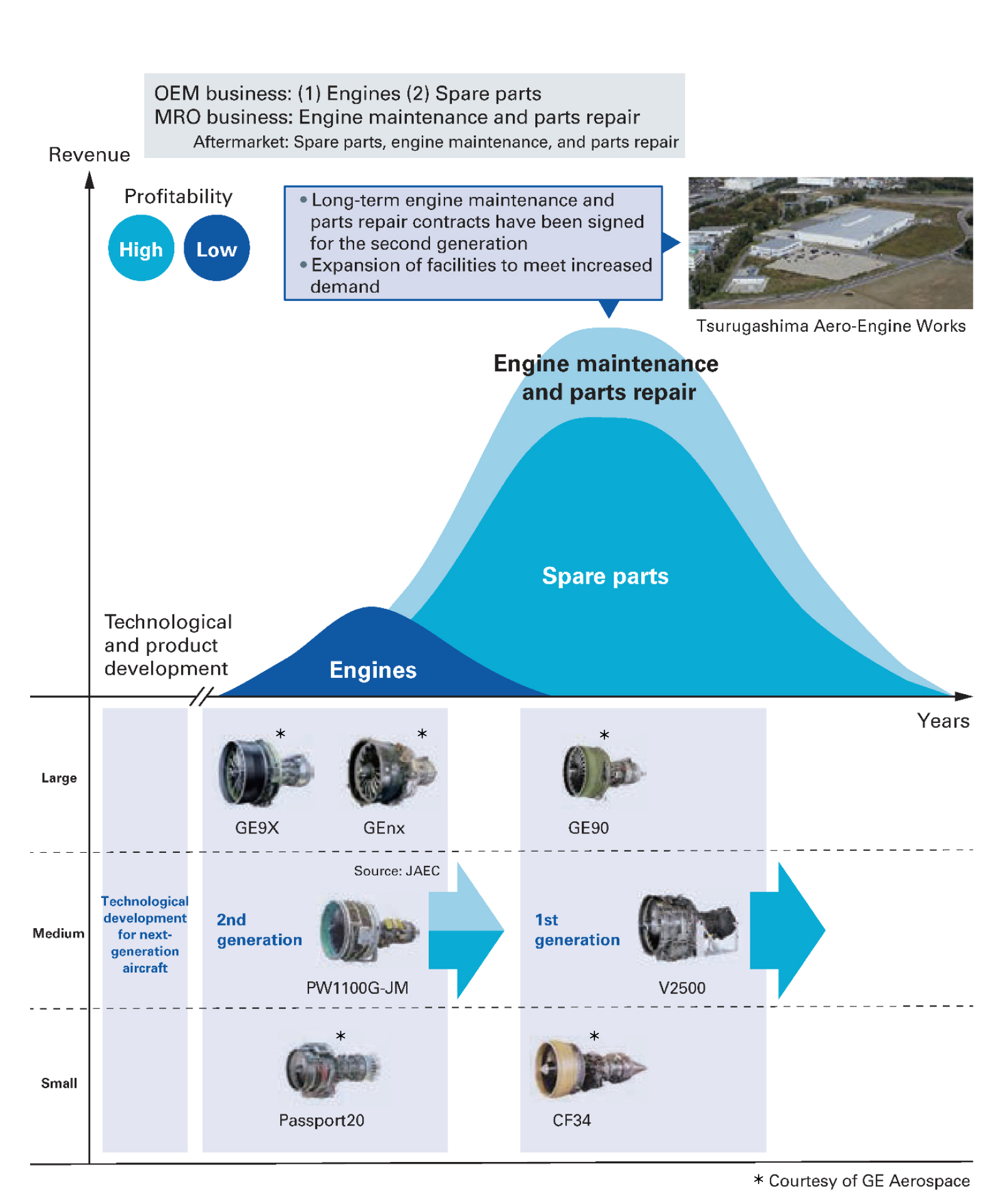
Participating in future new engine programs is also directly linked to the growth in future aftermarket revenue. Through participation in international joint development programs and the expansion of its technical responsibilities, the IHI Group aims to steadily build long-term revenue opportunities. The Group is already participating in multiple major global engine programs, expanding revenue opportunities in both component supply and the aftermarket. In the civil aero engine business, the Group aims to achieve revenue of approximately ¥600 billion by 2030 and will pursue sustainable growth in this attractive, highly profitable market with high barriers to entry.
While the civil aero engine business offers significant growth opportunities, it is also one in which the impact can be substantial if risks such as demand fluctuations, quality issues, or supply chain uncertainties materialize. To minimize these impacts, the Group has strengthened its quality assurance and risk management systems, and has established organizations and processes capable of detecting and responding to issues at an early stage. In addition, by combining this business with technologically compatible businesses such as the defense and space businesses, the Group is strengthening the resilience of its overall business portfolio.IHI Group Participation Modules/Components Responsible and Share for Major Engine Programs
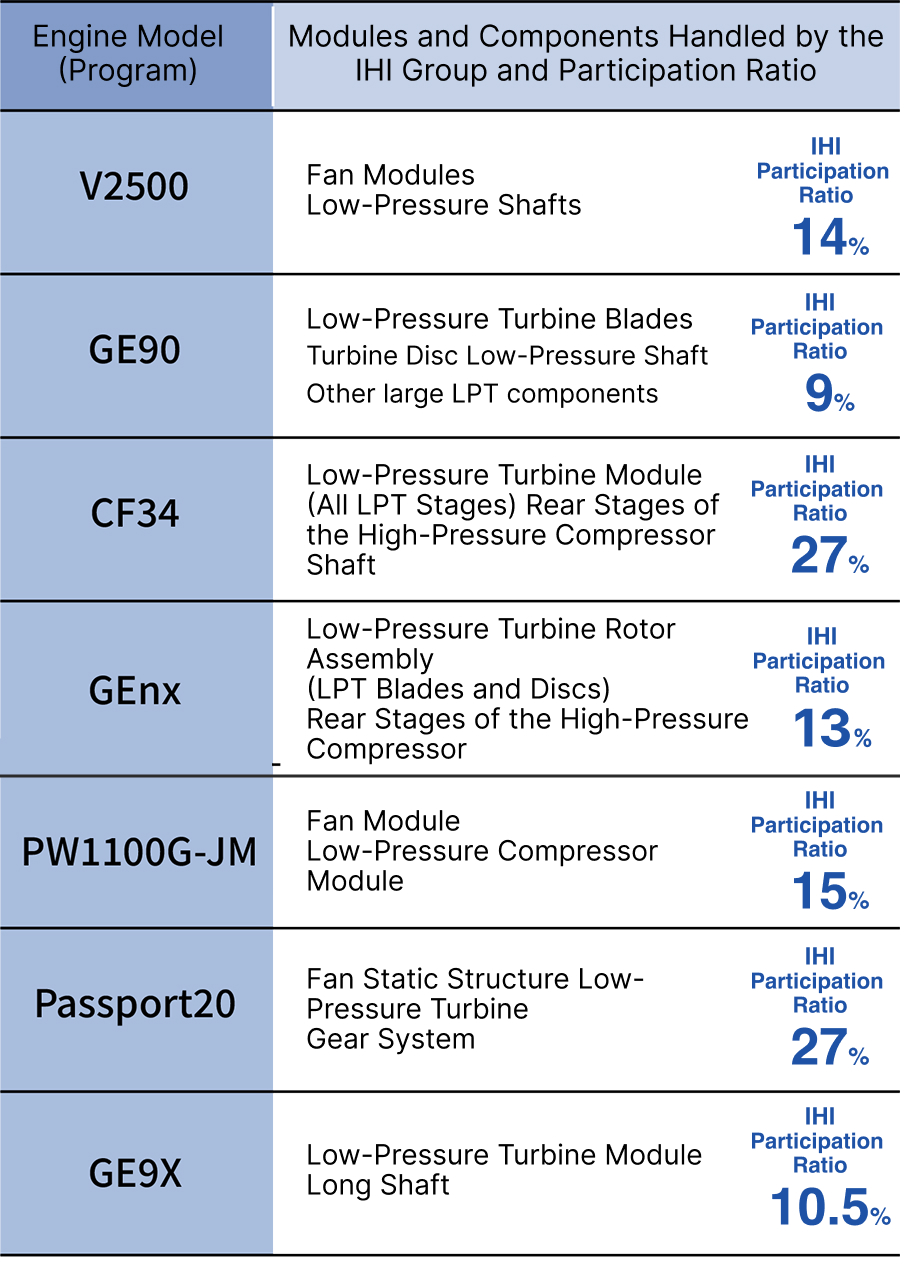
The value provided by the IHI Group's civil aero engine business extends beyond the supply of components. For airlines, the Group contributes to safe flight operations and lower operating costs by delivering highly reliable, high-performance, durable engines and improving maintenance efficiency. Improvements in engine performance and weight reduction also lead to better fuel efficiency and lower CO₂ emissions, supporting the environmental sustainability of the aviation industry as a whole.
For society, the Group supports the movement of people and goods and contributes to economic vitality by serving as a foundation for safe and efficient air transportation infrastructure. In addition, the creation of value through dual-use applications — by applying technologies developed in the defense and space fields to commercial businesses and, conversely, transferring technologies refined in commercial businesses to the security sector — is another distinctive strength of the IHI Group.
Through its civil aero engine business, the IHI Group will continue to support safe and secure air transportation and contribute to the sustainable development of air transport. -
Defense Business

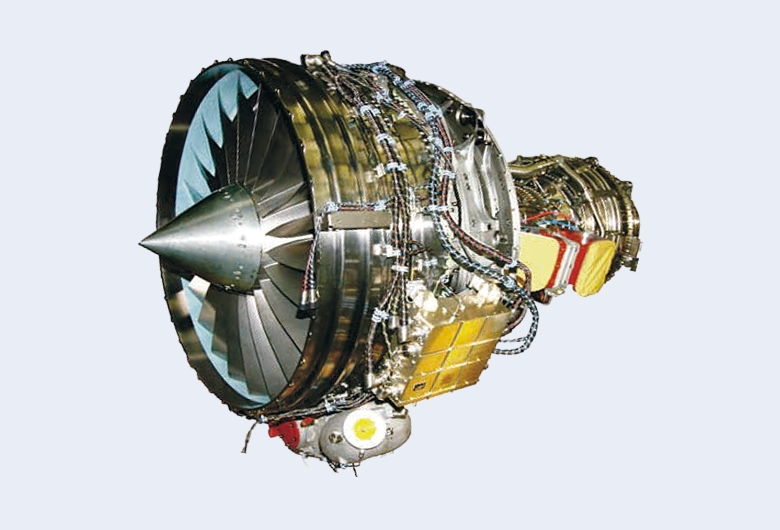
Amid changes in the security environment, the business environment surrounding the defense industry has changed significantly. Leveraging its strength in propulsion technologies, the IHI Group aims both to contribute to the strengthening of defense capabilities and to achieve business growth.
Market Environment
Japan is currently facing the most severe and complex security environment since the end of World War II. As geopolitical risks continue to rise, many countries are strengthening their defense capabilities, and defense investment has become a structural trend rather than a temporary response. In this context, expectations for the IHI Group's contribution to national security are also increasing.
In Japan, the so-called “Three Strategic Documents,” including the National Security Strategy, were formulated at the end of 2022, clearly setting out a fundamental strengthening of the nation's defense capabilities. Total defense spending for the five-year period from FY2023 through FY2027 has been set at ¥43.5 trillion. In the FY2026 budget, defense-related expenditures and other expenditures contributing to national security amount to approximately ¥10.6 trillion, equivalent to approximately 2% of GDP.The expenses based on contracts (material expenses) to be newly concluded
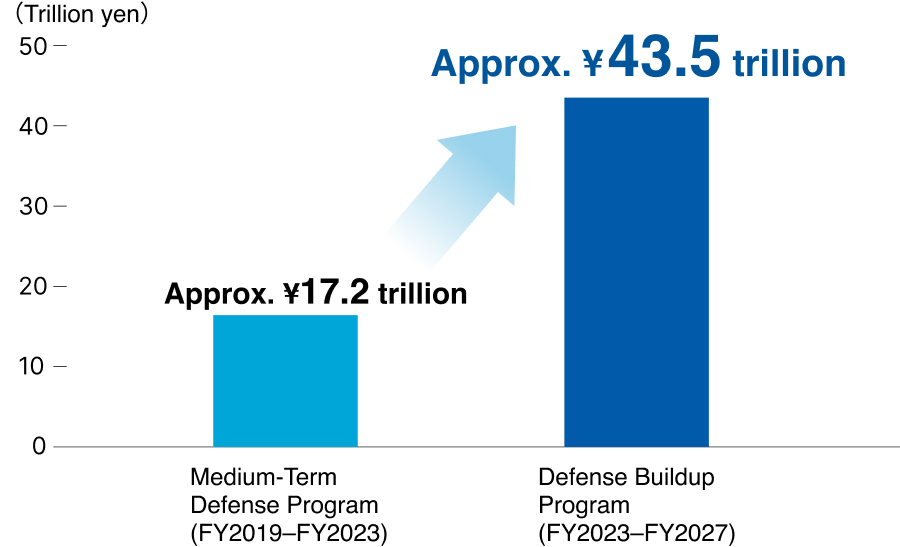
In addition to the expansion in scale, the earnings environment is also changing. The National Defense Strategy identifies the defense production and technological base as a component of national defense capability itself, and measures have been implemented to improve profit margins for companies in the defense industry. As a result, the business environment is becoming more conducive to sustainable operations than in the past.
Players in the Defense Industry
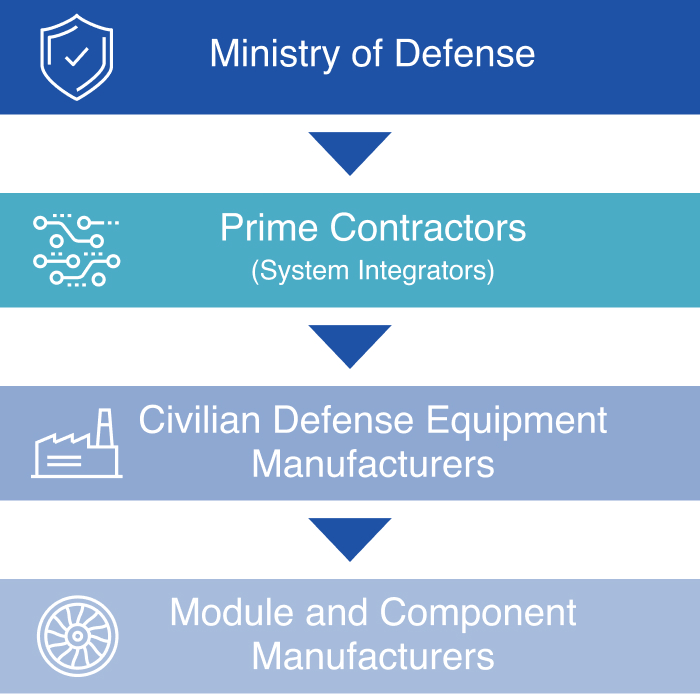
The defense industry has a multi-layered structure centered on the defense authorities, comprising prime contractors (system integrators), defense equipment manufacturers, module and component manufacturers, as well as maintenance and logistics support providers. Demand for defense equipment is relatively insulated from economic fluctuations and is formed over the medium term based on national security policy. At the same time, the need to meet high levels of confidentiality and stringent quality requirements and to assume long-term supply responsibilities means that the industry is supported by a limited number of companies with long-established track records and trusted reputations.
Business Strategy
Under these characteristics of the defense industry, the core of the IHI Group's competitive advantage lies in its technological capabilities in “propulsion”. In defense equipment, factors such as range, time to target, flight profile, and survivability directly determine defense capability, and these factors are determined by propulsion systems such as aero engines and rocket motors.
-
*
Characteristics and conditions of flight, including trajectory, altitude, speed, and flight distance.
In the fields of defense aero engines and solid rocket motors, the IHI Group has been responsible for critical components requiring exceptional reliability under extreme operating conditions, including rotating components, turbines, and shaft systems, for many years. In addition to achieving the required design performance, these components must be capable of minimizing quality variation in mass production and consistently reproducing the same level of quality throughout their operational life.
Supporting these requirements is the Group's integrated Materials & Processes expertise, which integrates materials, processing, assembly, and testing into a unified cohesive whole. Through its defense and space businesses, the IHI Group has advanced materials with ultra-high heat resistance, composite materials, and formed and fabricated materials technologies, establishing a technological foundation that meets the unique propulsion system requirements of high propulsion, high temperature, and high reliability. This organizational capability to reliably deliver design performance throughout operational use constitutes a competitive advantage in itself.
Defense Business: Process for Strengthening Competitive Advantages
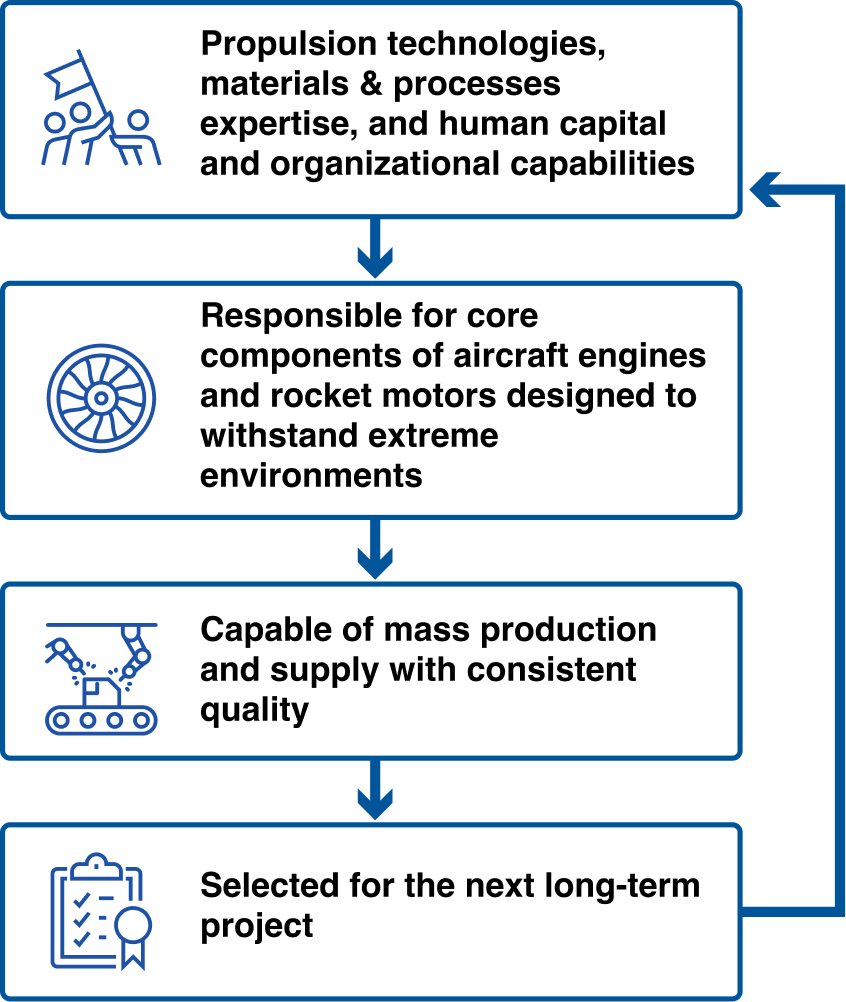
The people and organizational capabilities supporting the defense business are also key sources of competitiveness. The capabilities required to operate under stringent quality requirements and strict confidentiality, and to complete long-term projects, cannot be developed in a short period of time. The IHI Group develops and accumulates talent capable of consistently managing every stage from design and manufacturing to quality and supply, while preserving and passing on the expertise built through many years of experience.
Maximizing Opportunities- Focus on priority areas aligned with government policy
- Strengthen production capacity
- Strengthen procurement systems
- Enhance quality management
Minimizing Risks- Strengthen dual-use production and technology infrastructure
- Reinforce supply chain resilience
Demand is expected to continue growing in the areas where the IHI Group’s strength in propulsion-related technologies can be leveraged, driven by efforts to strengthen defense capabilities and advance next-generation defense equipment. The IHI Group will focus its management resources on the Japanese government's priority areas, including stand-off defense capabilities, integrated air and missile defense, and unmanned assets, to capture these growth opportunities.
At the same time, defense equipment frequently requires specification changes or increased production in response to changes in the operating environment and national security requirements. The IHI Group is building a supply system capable of responding flexibly to these changes by strengthening production capacity, reinforcing procurement systems for critical materials and components, and enhancing manufacturing processes and quality management.
During periods of expanding demand, factors such as dependence on specific materials and geopolitical risks can become business risks. The IHI Group is strengthening dual-use technologies and production infrastructure shared between commercial and defense applications while diversifying procurement sources and reinforcing supply chain resilience to achieve both stable supply and business continuity.
From a profitability perspective, the Group is leveraging these changes in the external environment to operate the business with higher profit margins than in the past. Through the medium- to long-term growth of the defense business, the IHI Group aims to achieve revenue of approximately ¥300 billion by 2030.The defense business is not merely about supplying defense equipment; it is about providing the reliability and technology that support operations over the long term. Going forward, the IHI Group will continue to contribute to Japan’s security foundation through the provision of defense equipment and technologies, helping to realize a safe and secure society.
-
*
-
Space Business

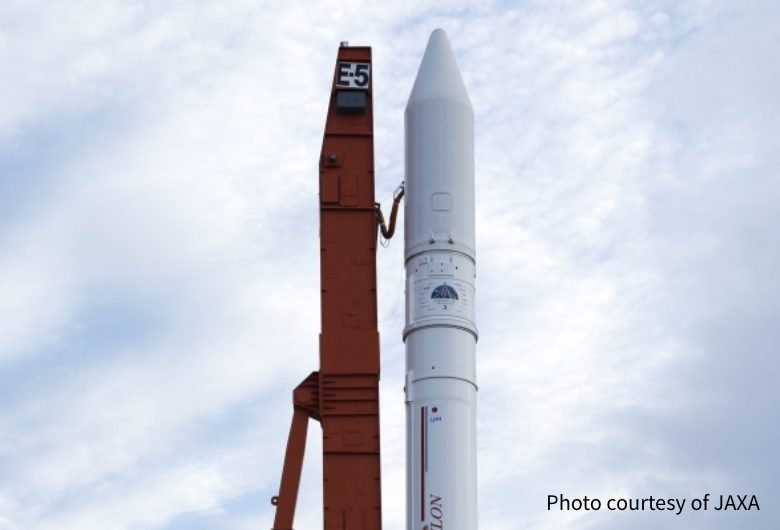
The expansion of space utilization is creating a wide range of business opportunities, from space transportation to satellite data utilization. Leveraging its “Propulsion” technologies and satellite operation technologies, the IHI Group will drive the growth of the space business.
Market Environment
In addition to traditional government-led development, the space industry has experienced accelerated growth in recent years with the entry of private-sector companies. As of 2025, the global space market is estimated by the Space Foundation at approximately US$680 billion. The market continues to expand, led by satellite services―including communications, broadcasting, and positioning―and ground equipment, as well as launch services and the manufacture and utilization of satellites. In Japan, the government has also set a target of doubling the space-related market, including satellite-based services, from approximately ¥4 trillion to ¥8 trillion by the early 2030s.
The space market can be divided into four segments: the development, manufacturing, and launch of rockets and satellites; satellite operations and ground infrastructure; satellite utilization and services; and space exploration and emerging fields. In recent years, the proliferation of small satellites and advances in data analytics have expanded the use of satellite data to address societal challenges, including disaster response, environmental management, and infrastructure monitoring. Satellite utilization and services account for around 70% of the overall space market. Moreover, as commercial space station initiatives and activities in cislunar space and on the lunar surface are expected to gather momentum, transportation within space—as well as transportation from Earth to space—is likely to become increasingly important.
Meanwhile, competition overseas is intensifying, driven primarily by private-sector companies establishing low-cost, high-frequency launches and developing large-scale satellite constellations. In this environment, the IHI Group will leverage its long-established expertise in propulsion technologies and other space-related technologies to contribute to enhancing the competitiveness of Japan's space industry and space business by delivering value across areas ranging from launches to infrastructure to the utilization of satellite data.IHI Group Initiatives
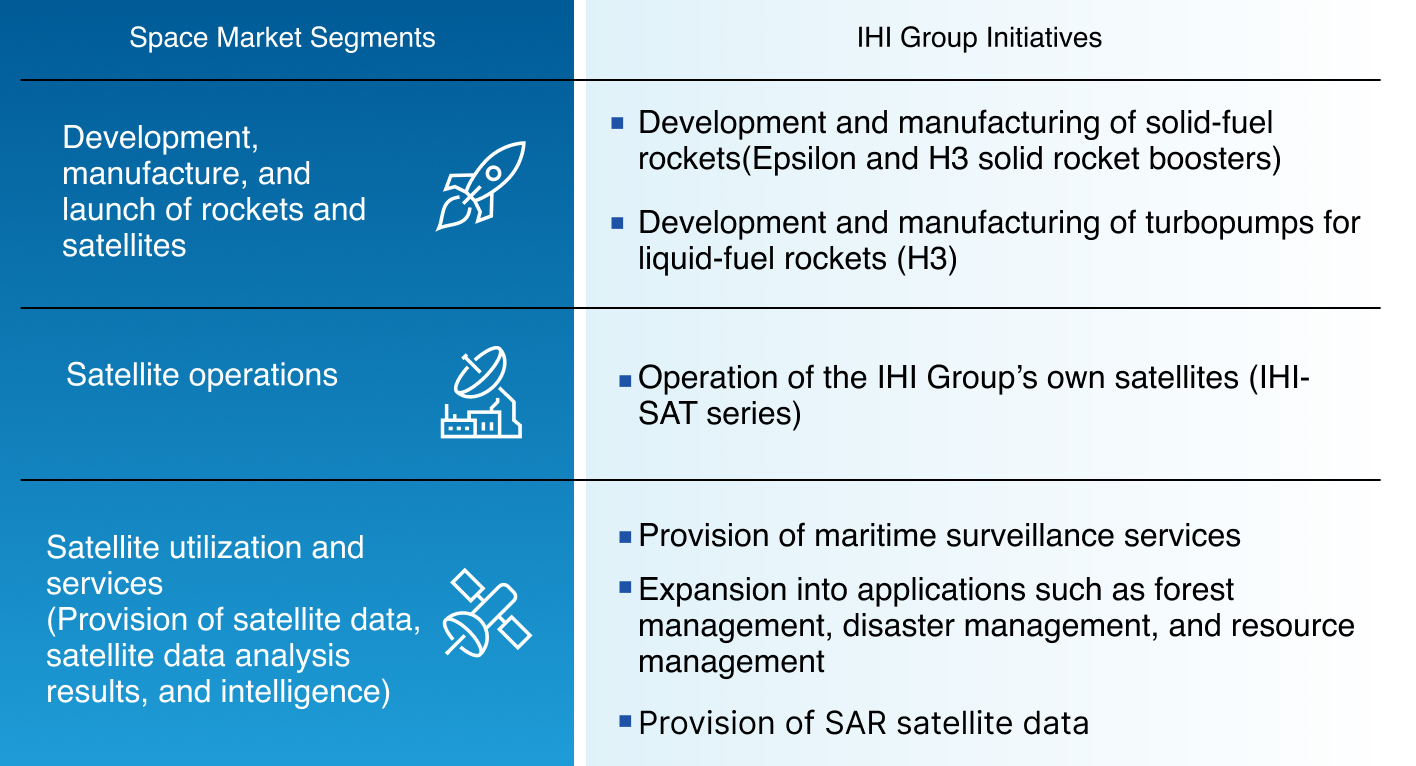 ScrollScroll
Business Strategy
- World-class propulsion technologies, represented by solid-fuel rockets
- Satellite operation and data utilization technologies
The IHI Group's greatest strengths in its space business are its world-class technological capabilities in propulsion and its engineering capabilities, which enable it to provide an integrated value chain from launch through satellite operation and data utilization. The technologies and expertise it has accumulated over many years, including propulsion technologies represented by solid-fuel rockets, lightweight structural design, manufacturing and quality control, and launch operations, constitute management resources that cannot be acquired in a short period of time. In addition, its operational know-how, including safety reviews and regulatory compliance, together with the trust it has built over many years, are key reasons clients choose the IHI Group.
Process for Strengthening Competitive Advantage
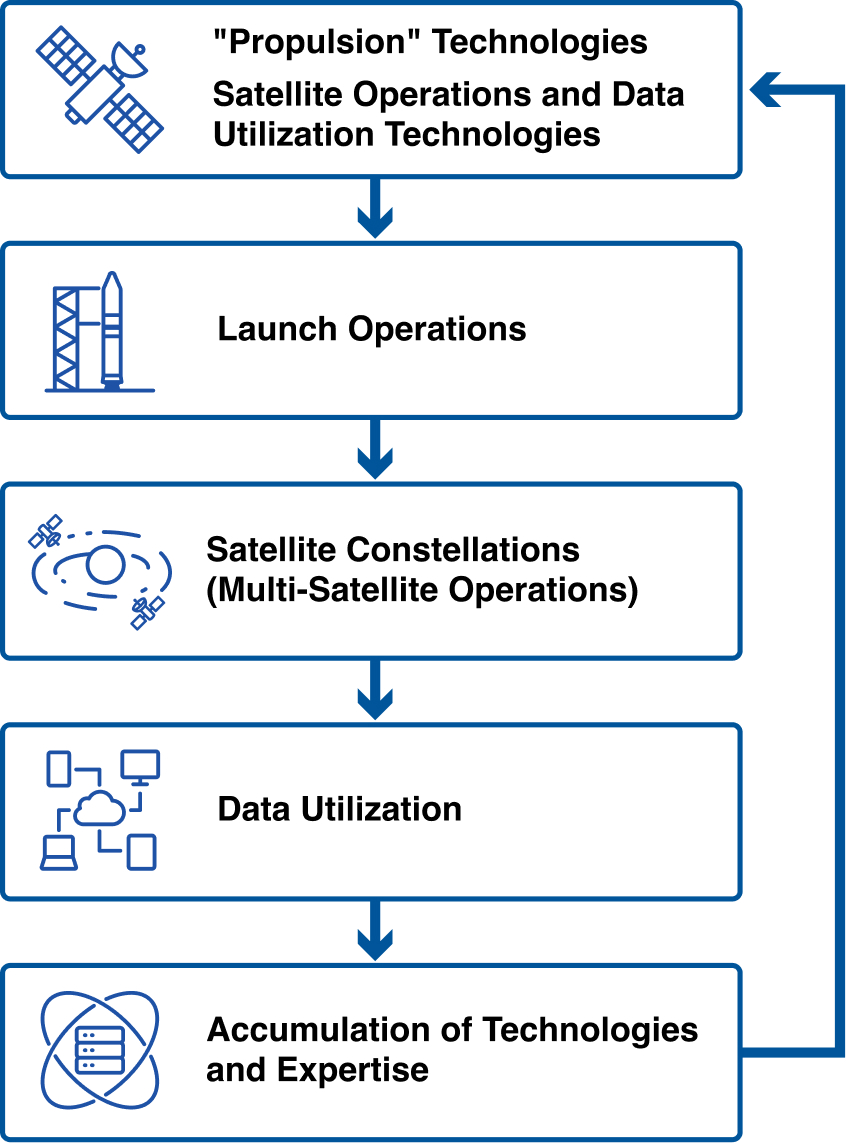
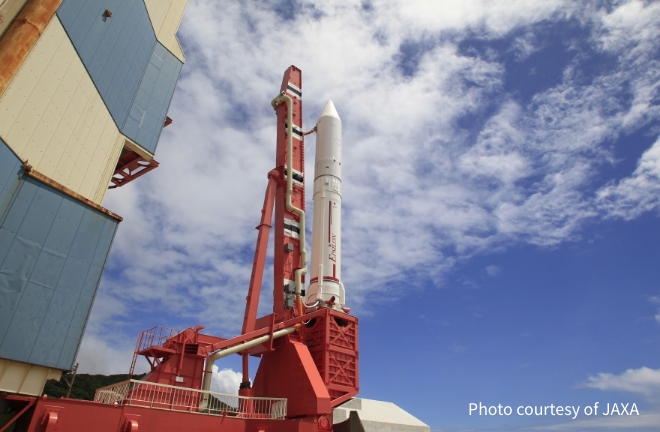
In the field of launch systems, IHI Aerospace is responsible for the development of the rocket system and the manufacture of the launch vehicle for Epsilon, a solid-fuel rocket that forms a key part of Japan’s flagship launch vehicle program. Since the launch of the demonstration vehicle in 2013, the company has contributed to five successful launches. It is currently developing the enhanced Epsilon S rocket to meet growing demand for small satellite launches.
For liquid-fuel rocket engines, the IHI Group has jointly developed liquid oxygen and liquid hydrogen turbopumps with JAXA for the engines of the H3 and is working to deliver high reliability and performance through mass production. In addition, the Group has conducted research and development on liquid-methane-fueled rocket engines for approximately 30 years.
In satellite operations, the IHI Group is one of the few companies in Japan with experience operating its own satellites. Through the IHI-SAT nanosatellite launched in 2021 and the IHI-SAT-2 nanosatellite launched in 2025, the Group has accumulated expertise in data acquisition and analysis from hands-on operations. In the field of satellite applications and services, the Group provides maritime surveillance services and is developing satellite data-based services for applications such as forest monitoring and infrastructure monitoring.
Furthermore, the Group aims to build and operate a satellite constellation combining multiple types of sensors, including optical, SAR*, and hyperspectral sensors, as infrastructure for acquiring and generating satellite data. Both operating multiple types of satellites simultaneously and analyzing and providing the data obtained in an integrated manner require advanced capabilities, and only a limited number of operators are capable of establishing such a system.-
*
SAR (Synthetic Aperture Radar): A radar for acquiring image information on the shape and characteristics of the Earth's surface by transmitting radio waves from an antenna mounted on a satellite or aircraft toward the ground and capturing the reflected signals from the Earth's surface.
The IHI Group will acquire the technologies required to develop and operate satellite constellations and take the lead in their deployment. Furthermore, the Group will leverage the business foundations it has built across the land, maritime, air, and space domains to collect information from multiple sources. By analyzing and providing the collected information in line with client needs, the Group will contribute to realizing a safe and secure society.
 Maximizing Opportunities
- Capture demand for small and microsatellites
- Develop next-generation space infrastructure
- Expand the dual-use market in satellite data utilization
Minimizing Risks- Address supply constraints
- Strengthen the quality assurance system
- Manage long-term business risks
- Strengthen regulatory compliance
In the rocket launch business, the IHI Group will provide highly reliable launch services centered on solid-fuel rockets to serve the growing launch market for small and microsatellites. While meeting government and national security demand, the Group will also seek to steadily capture demand by supporting the deployment of commercial Earth observation satellites and communications constellations.
The Epsilon S, currently under development, is a small launch vehicle with the capability to launch approximately 1.2 tonnes of satellite payload. It can carry multiple small and microsatellites and targets the market segment between large and micro launch vehicles. By providing low-cost, flexible launches of multiple satellites, it will support the development of next-generation space infrastructure.
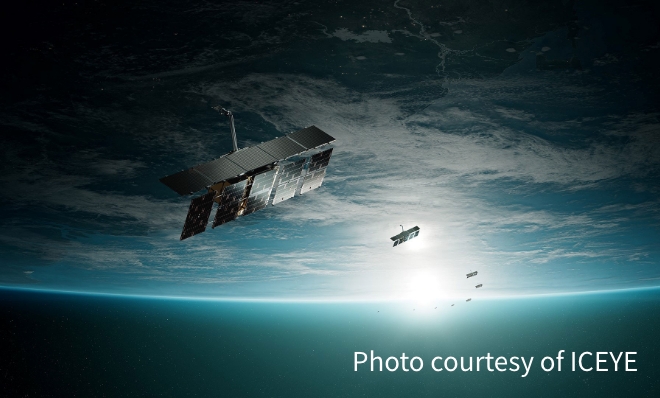
In the satellite data services business, the Group is creating services that address both defense and security needs and civilian demand under its dual-use strategy. In creating these services, the Group is strengthening its organizational competitiveness by flexibly incorporating cutting-edge technologies through collaboration with overseas companies, including ICEYE, and domestic startups. Through its SAR satellite constellation being developed in collaboration with ICEYE, the Group aims to contribute to disaster response and defense and security by providing high-frequency, high-resolution observation data. At the same time, it is expanding civilian services that address social challenges, including forest management, environmental monitoring, infrastructure inspection, water resource management, and agricultural land management.
Meanwhile, the space business is characterized by stringent reliability requirements and long development and operational cycles, giving rise to risks such as supply constraints, procurement of critical materials, quality assurance, and regulatory compliance. The IHI Group will continue to strengthen its business foundation through strategic investments and organizational enhancements, while pursuing both effective risk management and sustainable business growth.The IHI Group will continue to provide safe and reliable means of space transportation and to use observational information from space, thereby creating equipment and services that contribute to the development of a safer, more secure, and more convenient society. At the same time, the Group will continue to create opportunities for the utilization of space that contribute to the sustainable development of space transportation and to a safer, more secure, and more convenient society.
-
Nuclear Energy Business

As the world seeks to meet growing global electricity demand while advancing decarbonization, nuclear power is being reevaluated as an important energy source. The IHI Group will leverage its business capabilities across the entire lifecycle of nuclear power plants―from the design and manufacture of equipment that supports plant safety to plant operational support, maintenance, and waste treatment―to capture growing business opportunities in Japan and overseas.
Market Environment
- Increase in electricity demand
- Expansion of demand for decarbonized energy
Global energy consumption is becoming increasingly reliant on electricity, driven by economic growth and urbanization, as well as the expansion of data centers and the semiconductor industry. The International Energy Agency (IEA) points out that, as electricity demand continues to grow, ensuring a stable electricity supply will become more important than ever.
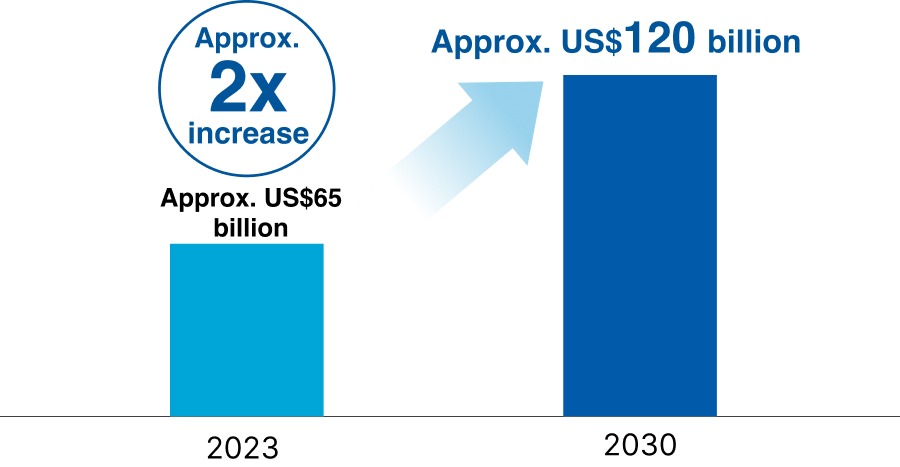
Nuclear energy is being reassessed globally as a source of electricity that emits no greenhouse gas emissions during operation while providing stable output over long periods. At COP28 in 2023, participating countries shared the goal of tripling global nuclear energy capacity by 2050. Global nuclear electricity generation reached a record high in 2024, and around 60 reactors are currently under construction worldwide. The IEA projects that annual investment in the nuclear sector could increase from approximately US$65 billion in 2023 to around US$120 billion by 2030. As of 2026, annual investment has increased to approximately US$80 billion.-
*
Source: IEA The Path to a New Era for Nuclear Energy
Annual Investment
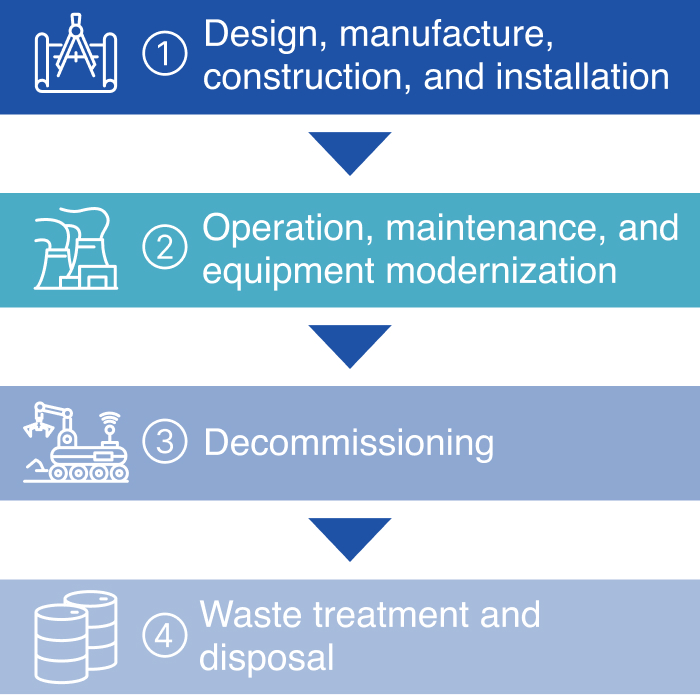
The nuclear industry consists of multiple areas: (1) the design, manufacture, construction, and installation of nuclear power plants and nuclear fuel cycle facilities; (2) operation, maintenance, and equipment replacement; (3) decommissioning; and (4) waste treatment and disposal. Each of these areas requires not only advanced technological capabilities but also strict regulatory compliance and long-term responsibility. Consequently, the nuclear energy business has high barriers to entry and depends on a long track record and established trust.
Business Flow of the Nuclear Industry
Business Strategy
Nuclear Energy Business: Process for Strengthening Competitive Advantage
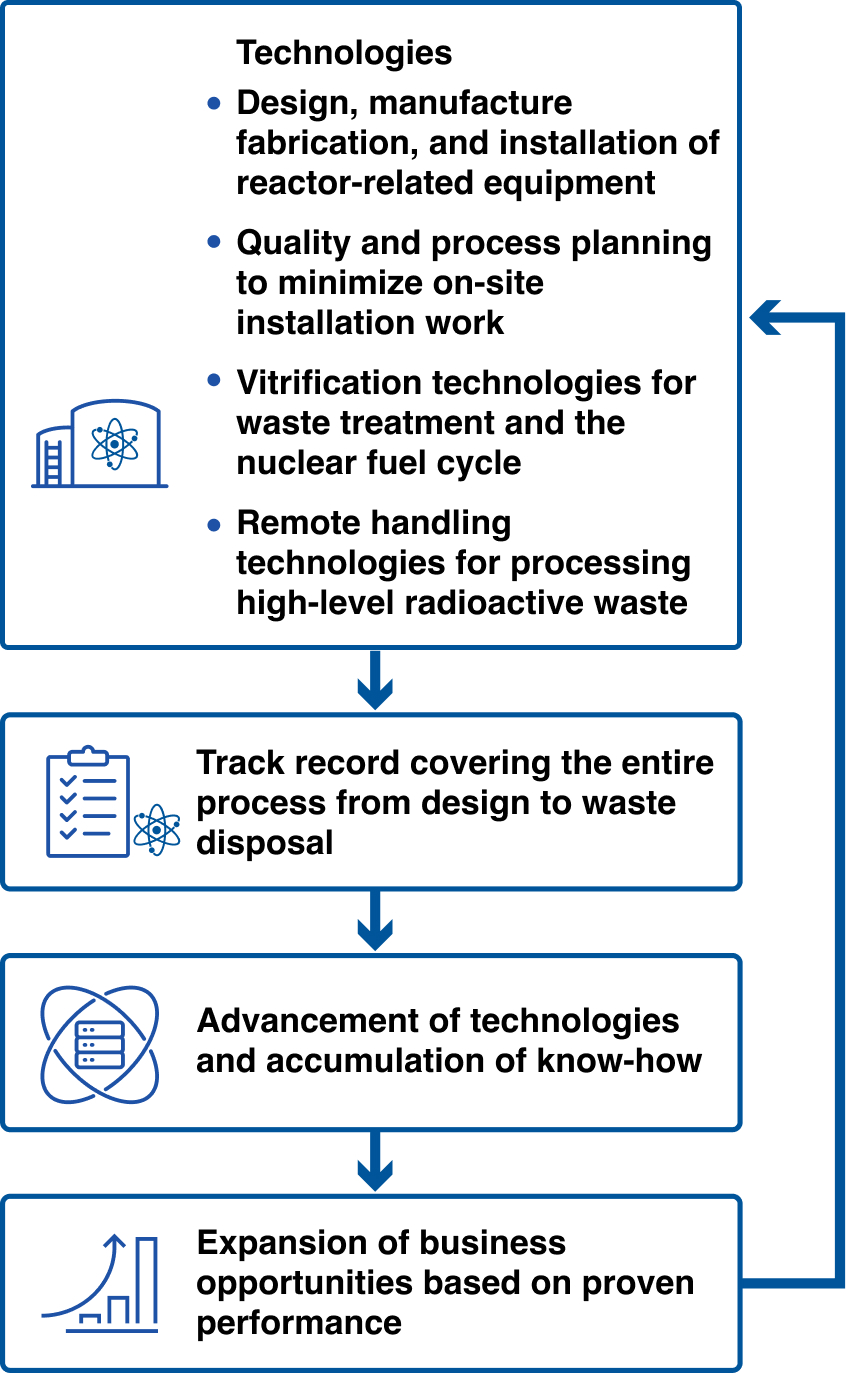
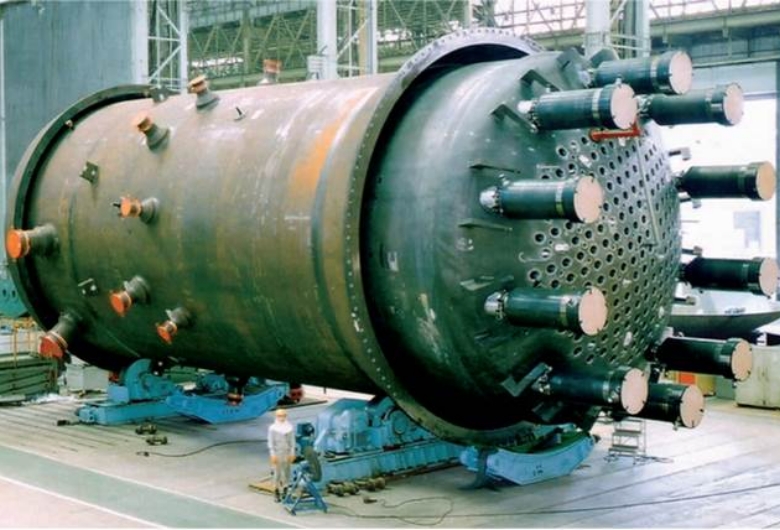
Throughout the lifecycle of nuclear power plants, the IHI Group has been responsible for providing large-scale equipment and related components that support reactor safety. This includes the design, manufacture, and installation of reactor pressure vessels, containment vessels, piping systems, and modules.
These components are required to meet the highest quality standards to ensure the safety and stable operation of nuclear power plants. In addition, during plant construction, they must be delivered to the construction site at the precise time required for installation. To meet these requirements, the design is optimized to facilitate manufacturing and minimize on-site work. During the manufacturing phase, mock-ups and personnel training help ensure both quality and schedule objectives are met. These activities must be carried out in accordance with nuclear-specific quality programs. As a company with a proven track record, the IHI Group also contributes to the restart of nuclear power plants.The IHI Group is working to further enhance the performance of ARMUT®, its commercially available ultrasonic flaw detector for nuclear power equipment, with the aim of improving inspection reliability in maintenance operations. To support this development, the Group is leveraging a broad range of information, including intellectual property data, and taking a multifaceted approach to product development.
In the waste treatment and nuclear fuel cycle fields, the IHI Group possesses vitrification technology that solidifies and manages high-level radioactive liquid waste in a stable form. Even on a global scale, only a limited number of companies are capable of providing this technology, making it a key enabling technology for the final disposal of radioactive waste.
Remote handling is essential at facilities that process high-level radioactive liquid waste. The reliable operation and maintenance of equipment and facilities in high-radiation environments require advanced technical capabilities and specialized expertise. By applying these technologies to the decommissioning of the Fukushima Daiichi Nuclear Power Station, the IHI Group contributes to accelerating the process.
The IHI Group is also involved in the field of small modular reactors (SMRs*). SMRs feature designs that enhance safety through their smaller generating capacity, the adoption of passive safety systems, and a reduced number of components. The IHI Group has been involved from the stage of defining design requirements, and in 2025 manufactured a full-scale mock-up of the steel module for the reactor building of an SMR project in Romania. Through these activities, the Group ensures quality and on-time delivery while accumulating expertise for future mass production and other projects.Small Modular Reactor (SMR)
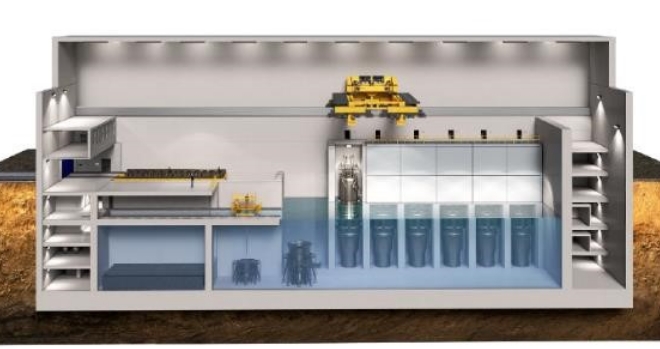
Copyright © 2026 NuScale Power, LLC. All Rights Reserved. -
*
A nuclear reactor designed with a smaller power output per reactor unit, making reactor cooling easier and enhancing safety.
Maximizing Opportunities- Respond to domestic demand for safety enhancement work for reactor restarts and equipment upgrades
- Supply equipment for overseas large-scale reactors and SMRs
Minimizing Risks- Technical expertise transfer
The IHI Group views its nuclear energy business as encompassing not only plant construction but also maintenance and equipment upgrades throughout a plant's operating life, as well as its eventual decommissioning. In the domestic market, the Group is responding to demand for safety enhancement work associated with reactor restarts and equipment upgrades, while securing ongoing business opportunities through improvement projects carried out during plant operation. Overseas, in addition to large-scale reactors, the Group anticipates growing demand for equipment for SMRs.
To meet this demand, the Group is strengthening the production capabilities of its Yokohama Works and Aioi Works while expanding its workforce responsible for design, manufacture, quality assurance, and on-site operations.
The Group is also working to pass down the expertise required for the construction of new nuclear facilities. In addition to design expertise that takes construction and operation into account, capabilities in regulatory compliance and the establishment of robust quality assurance systems are also essential. By actively involving junior engineers in active projects and providing them with hands-on experience, the Group is advancing both human capital development and the transfer of technical expertise.The value the IHI Group's nuclear energy business provides to society lies in helping achieve both a stable energy supply and decarbonization. Nuclear energy can serve as a viable energy source only when maintenance, equipment upgrades, and eventual decommissioning are carried out reliably throughout the plant lifecycle.
The IHI Group provides equipment and technologies that support the safe operation of nuclear power plants while delivering practical solutions throughout their entire lifecycle, including plant upgrades during operation and waste treatment. In doing so, the Group provides tangible support for the safety and reliability that are indispensable to the use of nuclear energy. By helping societies that use nuclear energy maintain the safety and public trust on which its use depends, the IHI Group's nuclear energy business fulfills an essential role. Building on these initiatives, the Group aims to expand revenue from its nuclear energy business to approximately ¥100 billion in the 2030s and achieve further growth in the 2040s. -
Ammonia Value Chain Business

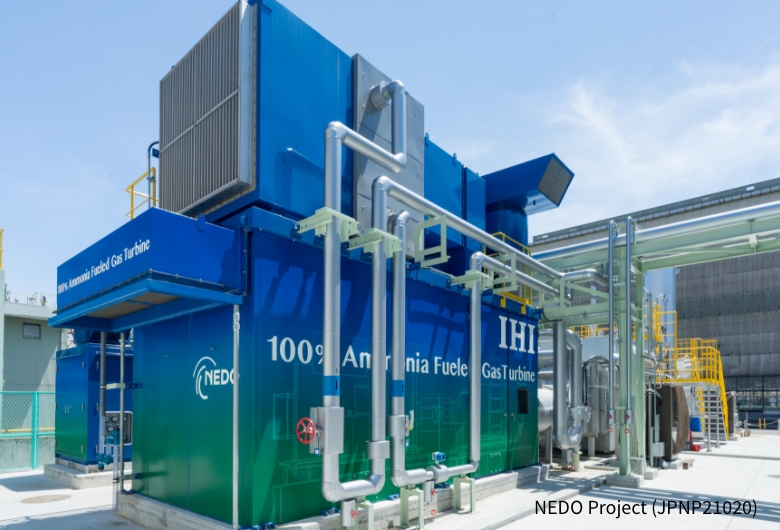
A new market for fuel ammonia is taking shape as part of efforts to realize a decarbonized society. Against this backdrop, the IHI Group is leveraging its strengths in combustion technologies and receiving and storage infrastructure to build an ammonia value chain that connects production through utilization, thereby creating new business opportunities and advancing society's energy transition.
Market Environment
- Growing demand for the transition to carbon-neutral fuels
- Increasing attention from the perspective of energy security
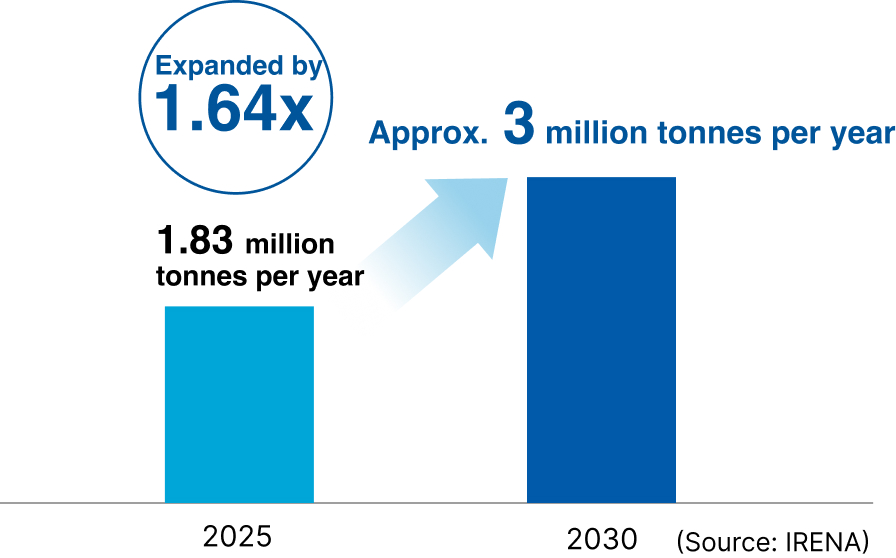
Approximately 200 million tonnes of ammonia are consumed worldwide each year, primarily for use as fertilizer. In recent years, driven by the global push toward decarbonization, its use as a fuel has been explored across a wide range of sectors, including power generation, industry, and shipping. In Japan, the government has set a target of expanding the use of fuel ammonia to approximately 3 million tonnes per year by 2030. In Europe and North America, discussions on the use of ammonia as a decarbonized power generation fuel are also advancing. The fuel ammonia market is still in its early stages of development and is expected to grow over the medium to long term.
Scale of Fuel Ammonia Deployment
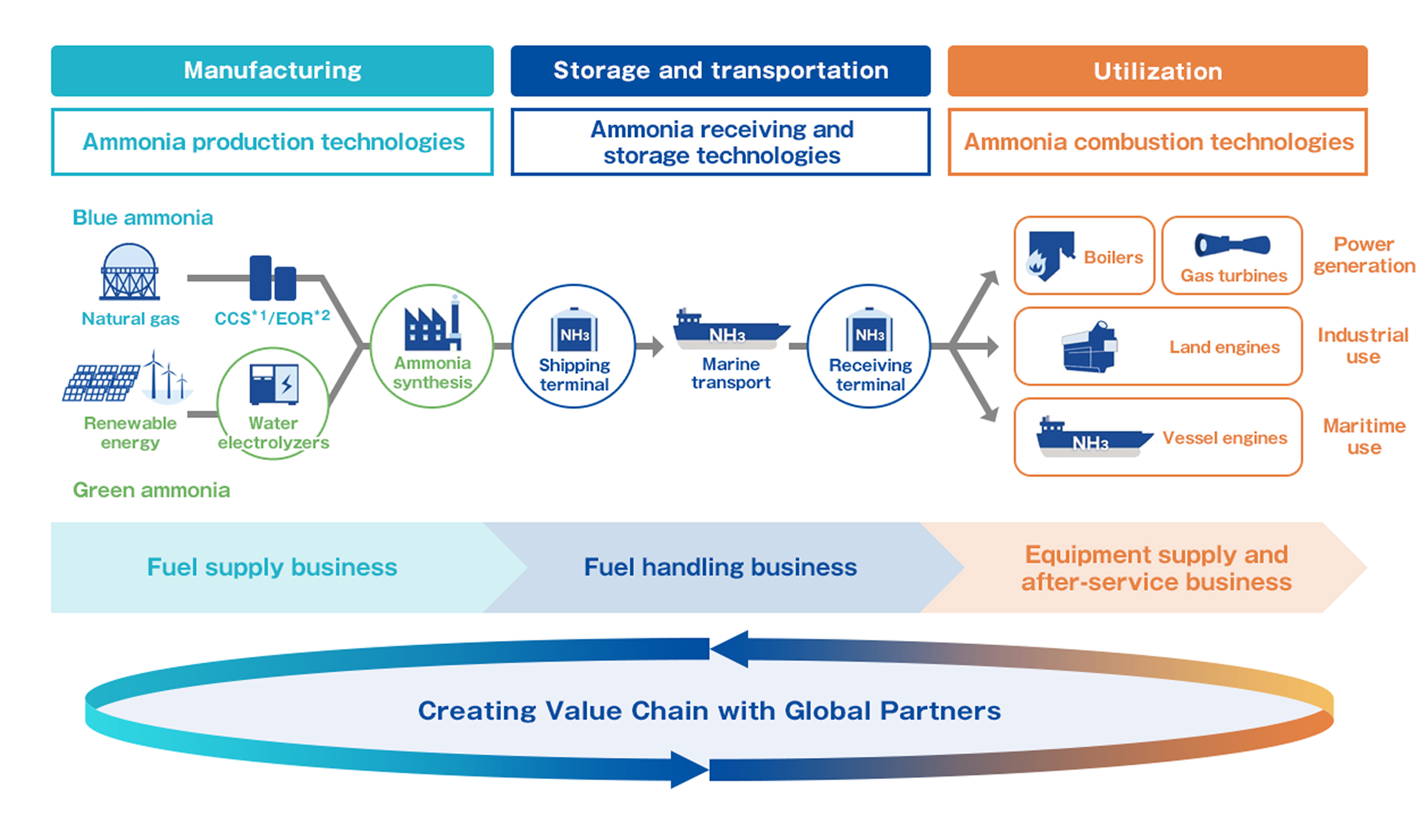
To commercialize ammonia as a fuel, it is necessary to develop the entire value chain, including production, storage, transportation, and utilization in an integrated manner so that it functions as a single, cohesive system. In the existing market, which is centered on fertilizer applications, demand is relatively stable. As a result, specialized players operate in each business segment, and a supply structure based on the division of labor has been established. In contrast, the market for fuel ammonia is still in the process of being established, making integrated management essential to coordinate production and transportation in response to demand trends while ensuring safety.
While this structure creates barriers to entry in the fuel ammonia business, it also has the potential to create new value and generate business opportunities through supply-demand coordination and optimization across the entire value chain.The Vision for the Fuel Ammonia Value Chain Business
Business Strategy
With the fuel ammonia market still in its early stages, establishing an environment in which clients can use low-cost ammonia safely and stably will be essential to driving future market growth. Building on its strengths in combustion and utilization technologies, receiving and storage facilities, and safety design, the IHI Group is developing an integrated business across the entire value chain, from production to utilization. Through these efforts, the IHI Group aims to contribute to the development of the market while creating new revenue opportunities.
- Industry-leading ammonia combustion technology
- Technologies that enhance clients’ economic viability by leveraging existing equipment
- Development and supply capabilities for ammonia receiving and storage facilities cultivated through the LNG business
1. Strengths in Ammonia Combustion Technology
Ammonia consists of hydrogen and nitrogen. One of the challenges associated with its use is that incomplete combustion can generate nitrogen oxides (NOx), which contribute to air pollution, as well as nitrous oxide (N₂O), a potent greenhouse gas. Drawing on combustion technologies developed through decades of experience in thermal power generation, the IHI Group has established technologies that ensure the complete combustion of ammonia while minimizing these emissions. These technologies are applicable not only in the power sector but also across a wide range of fields, including industrial facilities and marine vessels.
2. Strengths in Technologies That Leverage Existing Facilities
The IHI Group's strength lies in technologies that enable fuel conversion while minimizing clients’ capital investment requirements. For example, in the power generation sector, these technologies enable coal and ammonia to be co-fired using existing coal-fired power generation facilities. This supports a smooth transition to clean fuels that emit no CO₂ during combustion. In addition, plants can switch back to coal in the event of an emergency, providing greater operational flexibility.
3. Strengths in Development and Supply Capabilities for Ammonia Receiving and Storage Facilities Cultivated Through the LNG Business
The IHI Group holds a market share of approximately 70% in Japan's ammonia storage tank market. The cost of fuel ammonia is determined by production and distribution costs. If receiving hubs and supply infrastructure are not in place, ammonia must be transported and delivered separately for each client, increasing logistics costs.
By establishing distribution hubs centered on large-scale receiving terminals, ammonia can be imported in large volumes through consolidated shipments, thereby reducing distribution costs.
In addition to the technologies and engineering capabilities cultivated through its LNG business, the IHI Group has an established track record backed by its high domestic market share, and is well positioned to lead the development of large-scale receiving and storage infrastructure and thereby help reduce distribution costs. Furthermore, by participating not only in the development of these facilities but also in their operation, the Group can secure opportunities for recurring revenue.
Because ammonia is toxic, ensuring safety throughout every stage of production, storage, transportation, and utilization is essential. Drawing on its expertise in safety design, construction management, and operation and maintenance developed through its experience in the power generation and industrial plant sectors, the IHI Group provides integrated engineering that ensures the safety of entire facilities. This enables the Group to establish viable ammonia businesses by addressing safety alongside technology, economics, and supply chains.
Among the IHI Group's recent development milestones, it conducted a large-scale demonstration of fuel conversion to ammonia in a power generation boiler in April 2024, using ammonia at a 20% heat input ratio, and achieved favorable results. In June 2026, the Group also completed technical verification toward the commercialization of an ammonia-only burner for boilers, advancing the establishment of the technologies required for fuel conversion. In the gas turbine sector, the Group successfully achieved 100% ammonia combustion in a 2 MW-class small- to medium-sized gas turbine in June 2022. Furthermore, in March 2026, it successfully conducted a 100% ammonia combustion test using the combustor of a GE Vernova large-scale gas turbine.Ammonia Gas Turbines
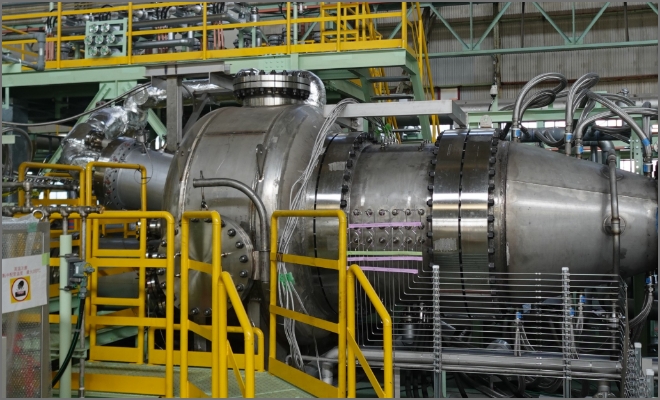
While ammonia co-firing (20 to 60%) in coal-fired power plants serves as an important transitional step toward decarbonization, 100% ammonia firing represents one option for achieving further reductions in CO₂ emissions. This, in turn, depends on the successful development of 100% ammonia combustion technology for large-scale gas turbines suitable for utility-scale power generation. The IHI Group is therefore steadily advancing development in accordance with the Group’s roadmap to commercialize 100% ammonia-fired gas turbines by 2030.
In parallel with these demonstration tests, the IHI Group has continuously filed patent applications since 2015 for technologies that are critical to commercialization. Among the IHI Group’s patented ammonia combustion technologies are innovations that have received high external recognition, including the Invention Award at the FY2025 National Commendation for Invention, presented by the Japan Institute of Invention and Innovation. The IHI Group is also advancing international standardization initiatives, including the publication of ISO/TS 21343, a technical specification for large power generation boilers using fuel ammonia. Together, these demonstration achievements, the IHI Group’s intellectual property portfolio, and its international standardization initiatives have helped secure the Group’s competitive advantage while strengthening the prospects for future commercialization and revenue generation.Maximizing Opportunities- Business development leveraging the world's only ammonia combustion technology
- Collaboration with partners and government agencies possessing specialized expertise
- Utilization of government support programs
The IHI Group is building its ammonia value chain business across production, storage and transportation, and utilization through collaboration with partner companies and government agencies that possess specialized expertise.
In India, the IHI Group is collaborating with ACME, one of the country's leading renewable energy companies, on a green ammonia production and sales project, aimed at producing ammonia in India and exporting it to Japan. The two companies are jointly advancing development of an ammonia production facility in India, with plans to produce approximately 400,000 tonnes of green ammonia annually by around 2030 for export to the Japanese market. In June 2026, the project was approved by Japan’s Minister of Economy, Trade and Industry and Minister of Land, Infrastructure, Transport and Tourism for support under the Contract for Difference Support Scheme*1 established pursuant to the Hydrogen Society Promotion Act*2. Obtaining this approval represents an important milestone in the development and expansion of the ammonia value chain in Japan.-
*1
A support scheme administered by the Agency for Natural Resources and Energy of the Ministry of Economy, Trade and Industry (METI) that provides support to bridge the price gap between low-carbon hydrogen and its derivatives, including low-carbon ammonia, and existing fuels and feedstocks, with the aim of establishing supply chains for low-carbon hydrogen and related products.
-
*2
Act on Promotion of Supply and Utilization of Low-Carbon Hydrogen and its Derivatives for Smooth Transition to a Decarbonized, Growth-Oriented Economic Structure.
Steady progress is also being made in developing ammonia supply hubs to store imported ammonia. In collaboration with Hokkaido Electric Power Co., Inc., Mitsui & Co., Ltd., and Tomakomai Futo Co., Ltd., the Group is advancing studies on an ammonia supply hub centered in the Tomakomai area of Hokkaido. In March 2026, the project received certification under the Hub Development Support Program*3 from the Minister of Economy, Trade and Industry and the Minister of Land, Infrastructure, Transport and Tourism.
-
*3
A program administered by the Agency for Natural Resources and Energy of the Ministry of Economy, Trade and Industry to support the development of infrastructure required for the transportation and storage of low-carbon hydrogen and its derivatives with the aim of accelerating supply and utilization.
Furthermore, to establish a safe and stable ammonia supply system, the IHI Group signed a joint development agreement with Vopak, one of the world's leading terminal operators based in the Netherlands, for the development and operation of ammonia terminals in Japan. The Group is also collaborating with Yara, the world's largest fertilizer producer based in Norway, to optimize ammonia shipping and establish a mutually complementary supply system capable of responding flexibly to fluctuations in supply volumes. Through these initiatives, the IHI Group will leverage the expertise of specialist companies in each field to achieve both safety and economic efficiency.
The IHI Group supports clients in achieving stable and cost-effective decarbonization by curbing CO₂ emissions across the entire ammonia value chain, from production through utilization, while providing an environment in which ammonia can be used safely.
To achieve this, the IHI Group is building an integrated business across the entire ammonia value chain. In addition to producing and supplying fuel ammonia, the IHI Group will provide storage infrastructure, ammonia utilization equipment, and comprehensive operation, maintenance, and parts services. Through these efforts, the IHI Group aims to generate approximately ¥900 billion in revenue by 2050. -
Bridge and Water Gate Business

Market Environment
- Growing demand for new bridge construction and bridge renewal driven by the concentration of population and urban functions in urban areas
- Growing demand for new bridge construction and bridge renewal driven by increasing logistics volumes
- Growing demand for new water gate construction and water gate renewal driven by rising flood risk associated with climate change
- Growing demand for the renewal of aging bridges and water gates
The environment surrounding social infrastructure is becoming increasingly challenging as populations and urban functions concentrate in urban areas, logistics volumes continue to grow, climate change heightens flood risk, and labor shortages persist in the construction and maintenance sectors. As a result, the challenge of maintaining and operating social infrastructure continues to grow. At the same time, the need to renew aging infrastructure is increasing. Going forward, simply renewing aging infrastructure will not be enough. Infrastructure must be renewed while remaining in use, maintained with a limited workforce, and kept functioning even when unexpected events occur.
As a result, the value expected of social infrastructure is no longer defined solely by the performance of individual assets. It now extends to capabilities such as condition monitoring, operational decision-making, and the ease of asset renewal. The market is also shifting beyond a focus on design and construction toward one in which competitiveness is determined by the capability to deliver services from a lifecycle perspective, encompassing both asset renewal and ongoing operations.Business Strategy
●Bridge Business
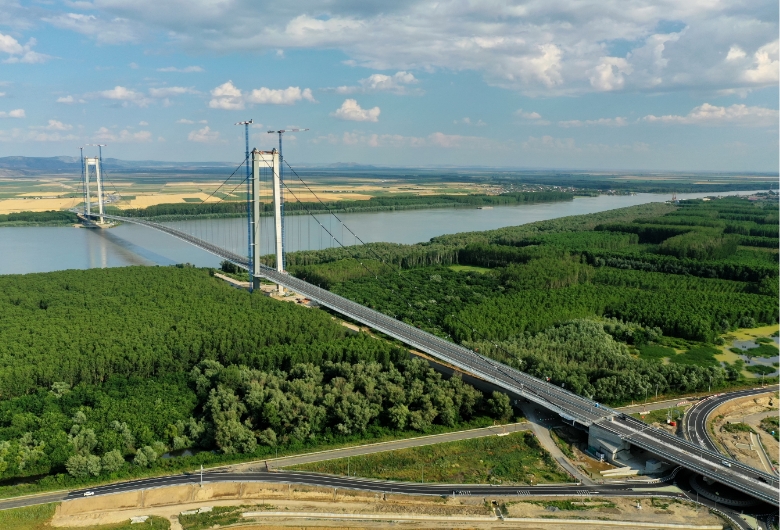
In the bridge engineering sector, the capability to design, construct, and execute bridge renewal, service life extension, and seismic strengthening projects while maintaining uninterrupted public use under highly constrained conditions, such as dense urban environments and heavily trafficked routes, has become a key competitive advantage. Through the integration of its bridge business, the IHI Group has established comprehensive lifecycle capabilities encompassing both steel bridges*1 and prestressed concrete (PC) bridges*2. The Group will apply the engineering capabilities developed through bridge projects in Japan and overseas to the renewal and upgrading of bridges.
-
*1
A bridge that uses steel as the primary structural material for key components such as bridge girders.
-
*2
A bridge that uses concrete into which compressive stress is introduced in advance.
In recent years, market demand has shifted from the renewal of aging infrastructure to upgrading existing infrastructure with advanced capabilities. For example, in the Republic of Türkiye, the IHI Group has been selected for a project to evaluate the use of real-time dynamic pricing, based on measured traffic data, to optimize traffic flow and reduce congestion across existing transportation infrastructure. This initiative expands the capabilities of existing infrastructure, enabling it to address emerging societal challenges.
For more than 20 years, the IHI Group has continuously used patents to protect technologies related to bridge renewal, service life extension, and seismic strengthening. Notably, the frequency with which its bridge renewal patents are cited by other companies has increased fivefold compared with 2019. This indicates that IHI's technologies are contributing to subsequent technological development and are widely used as the basis for bridge design and construction across the industry. As a result, they reinforce the Group's technological leadership while contributing to barriers to entry for competitors.Bridge Business: Process for Strengthening Competitive Advantage 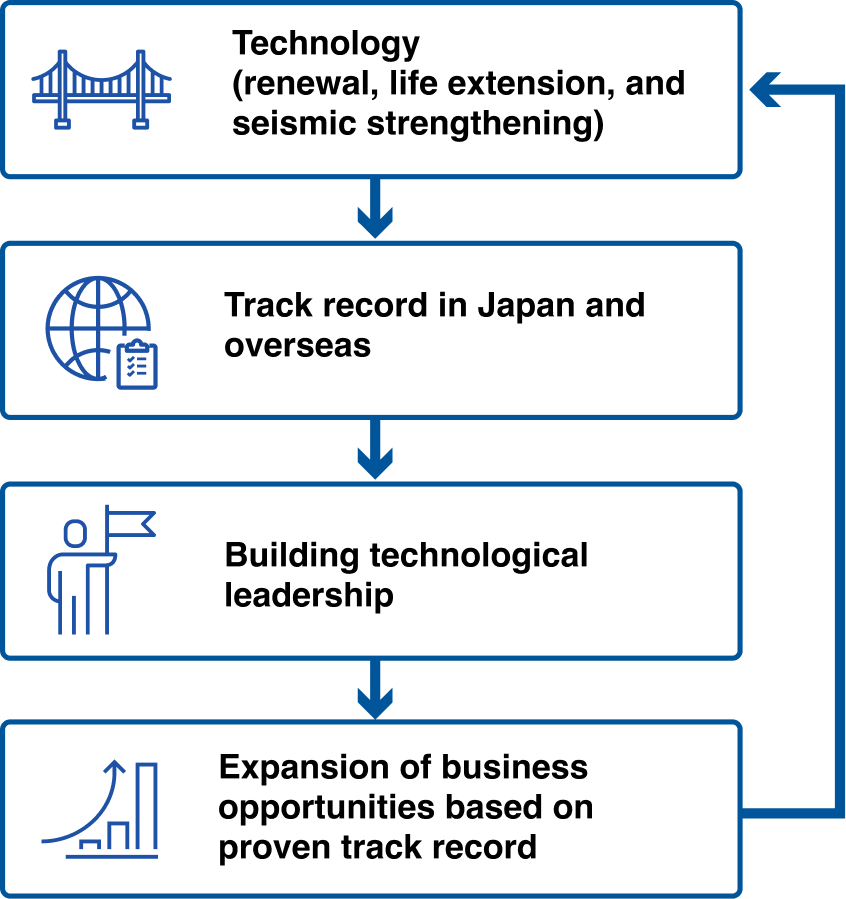
●Water Gate Business
In the water gate business, the Group's competitive advantage comes from the capabilities it has built across the full lifecycle, from design, manufacturing and installation to inspection and maintenance. These include expertise in operations and maintenance, workforce development, and remote and automated technologies designed to ensure reliable operation during disasters. As climate change increases the need for adaptation to more severe and frequent weather-related disasters, water gates are expected to serve not merely as equipment in terms of their function, but as reliable social infrastructure that functions dependably in emergencies. Such a high level of reliability, represented by watertight technologies such as those used in high-pressure gates, is supported by long-term experience in design, manufacturing, installation, operation and maintenance and the technologies and expertise accumulated through history, making it difficult to replicate in a short period. The Group is also taking steps to protect some of these technologies through patents, further reinforcing its competitive advantage.
Water Gate Business: Process for Strengthening Competitive Advantage 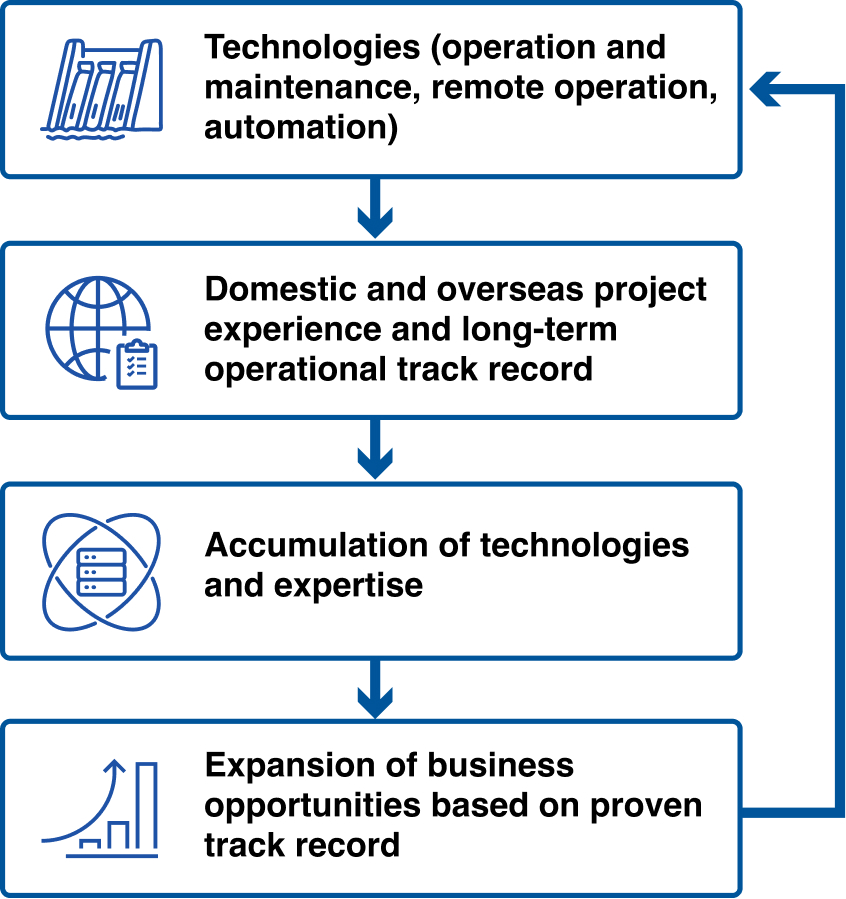
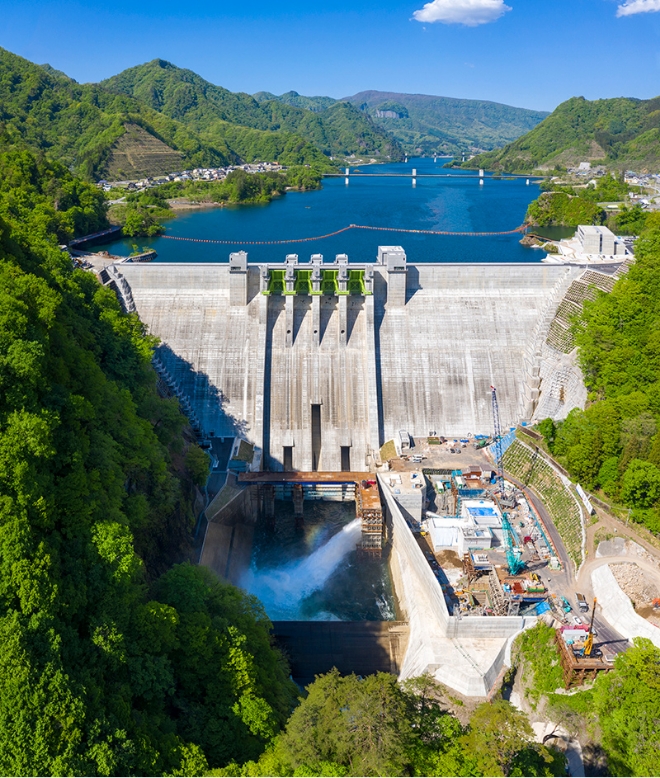
Water Gate Equipment for Dams
●Shield Systems Business
In the field of shield tunneling systems (tunneling machines), the Group has continuously expanded its capabilities to support long-distance drives, sharp curves, large-diameter tunnels, and deep underground excavation, enabling the development of underground infrastructure that was previously considered unfeasible. The Group is also advancing technologies that improve the efficiency and reliability of tunnel excavation while minimizing impacts above ground. Through these technological advances, the Group aims to deliver infrastructure more efficiently with a lower environmental footprint, thereby strengthening its competitive advantage.
The IHI Group will leverage the expertise gained through maintaining bridges, water gates, tunnels, and other urban and social infrastructure to optimize renewal planning, execute renewal projects in challenging locations, and enable more labor-efficient and autonomous operations. By expanding the value created through maintenance, the Group aims to ensure that urban and social infrastructure continues to function reliably under both normal and emergency conditions.
Within this framework, the Group has identified the following three priorities for future business expansion:- Leveraging maintenance data and expertise to create value across the entire asset lifecycle, from maintenance through renewal and operations.
- Improving the efficiency of the movement of people and goods in space-constrained metropolitan areas.
- Supporting next-generation high-specification roads and automated logistics systems to enhance mobility and logistics across society.
Maintenance is not merely an after-sales service, but a foundation for understanding clients’ needs and delivering value throughout the asset lifecycle.
The value provided by the IHI Group extends beyond the delivery of structures and equipment to their renewal and operation. The Group delivers infrastructure that minimizes disruption and functions reliably. In the bridge business, the Group renews and upgrades infrastructure that supports the movement of people and goods, contributing to the continuity of urban activities. In the water gates business, the Group reliably maintains infrastructure that supports flood control and water resource management, including the enhancement of operational capabilities. In the shield systems business, the Group builds underground infrastructure, contributing to the resilience of society.
Furthermore, advancing next-generation mobility and logistics will require the technologies and operational expertise needed to support automated cargo handling and the sharing of arrival information at the interfaces between roads and logistics hubs. Leveraging the expertise and capabilities it has developed through its businesses, the IHI Group is conducting pilot projects to support the deployment of the Autoflow Road. The Group will continue promoting initiatives that integrate road infrastructure with logistics hub operations, enabling logistics to function as an integrated social system.
Going forward, the IHI Group will combine engineering capabilities for highly challenging social infrastructure projects with advances in operation and control enabled by digital technologies. Through these two strengths, the Group will secure a competitive advantage in the market for the renewal and upgrading of urban and social infrastructure, contribute to a safe, secure, and comfortable society, and generate cash on a sustained basis. -
Carbon Solutions, Power Systems and Other Businesses

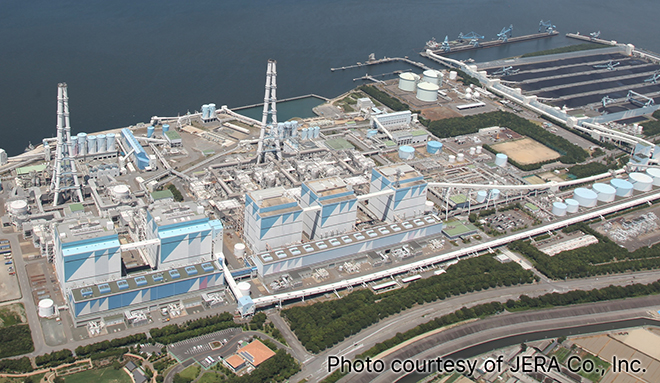
The IHI Group’s boiler maintenance business primarily provides maintenance, modification, and renewal services that support the stable operation of existing boilers at thermal power plants and industrial facilities.
Boilers
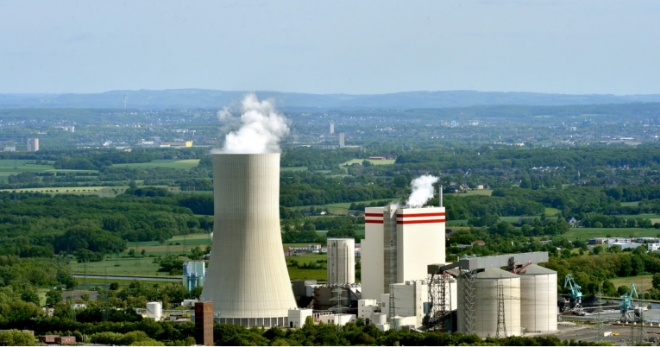
As one of the world's leading boiler manufacturers, the IHI Group has extensive expertise in boiler design, manufacturing, and construction, together with deep knowledge of the structures and degradation characteristics of boilers and associated equipment. The IHI Group also has technologies for modifying boilers while maintaining their safety and performance. Its strengths include coal-fired power generation technologies such as ammonia co-firing, biomass co-firing, and 100% ammonia combustion technology, which contribute to decarbonization, as well as technologies for effectively utilizing a wide range of fuels, including low-grade coal, which contribute to energy security.
IHI also utilizes the MEDICUS NAVI® remote monitoring system to continuously monitor operating data, detect early signs of abnormalities, and centrally manage maintenance records. This enables optimized scheduled inspections and helps prevent unplanned shutdowns, improving equipment availability while containing maintenance costs.
Recurring maintenance services, including periodic inspections and component replacements, together with retrofit projects to address equipment aging and improve efficiency, generate stable cash flows throughout the equipment lifecycle.The IHI Group’s Plant Solutions business provides integrated services covering the entire lifecycle of power generation and industrial plants, from engineering, procurement, and construction (EPC) to operation and maintenance. Building on the design and construction expertise and technologies developed through new plant projects, the business extends into long-term operation, maintenance, and retrofit services, delivering value throughout the plant lifecycle.
Plants
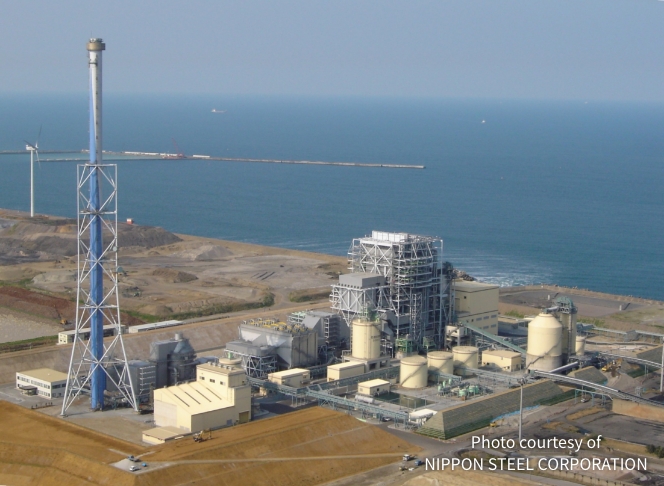
For new plants, IHI develops technologies that meet increasingly sophisticated client needs, including higher plant efficiency, labor-saving construction methods, and operational optimization. By strengthening cost competitiveness, these technologies help IHI secure orders on an ongoing basis.
In recent years, IHI has expanded its efforts to include the conversion of existing plants to ammonia fuel to support decarbonization, as well as the expansion and modification of plant facilities in response to changing demand for petrochemical products. IHI has also begun leveraging AI and IoT technologies to introduce smart plant technologies, including operational optimization and remote operation, and to improve the efficiency of engineering and design processes. Through these initiatives, IHI supports the stable operation and extended service life of plants.
By securing new plant projects as a starting point to generate recurring service demand over the plant lifecycle, the Plant Solutions business accumulates earnings and generates cash on an ongoing basis. In this way, the business serves as a stable cash-generating base that supports the IHI Group's investments in growth.The Power Systems business provides products such as marine and land-based engines, supported by comprehensive lifecycle services, including parts supply, maintenance, and technical support.
Diesel Engines
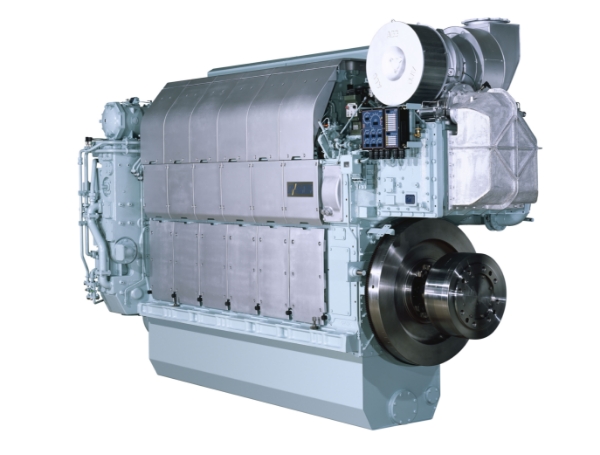
The business model is built around the long-term operation of its engines, providing ongoing operational support that generates recurring revenue throughout the engine's lifecycle.
Because the lifecycle business depends on the sale and adoption of engines, the Group does not simply expand its product lineup. Instead, it selectively and strategically introduces models that draw on the IHI Group's strengths, including its technologies, and meet client needs. Clients’ long-term use of these models helps reduce their costs throughout the lifecycle while enabling IHI to generate stable earnings.
In addition to supplying plants and complete engines, the Power Systems business supplies fuel injection systems, a core engine component in which the IHI Group has strengths, for engines manufactured by other companies. Leveraging its expertise in this core engine technology, IHI expands its lifecycle business beyond its own installed base and into the broader engine market.
These initiatives are supported by continued investment in technologies aimed at strengthening the Group's future competitiveness. By applying technologies that improve reliability and maintainability and extend service life to engines and key components, the Power Systems business provides the IHI Group with a stable earnings base. -
Parking Systems and Other Businesses


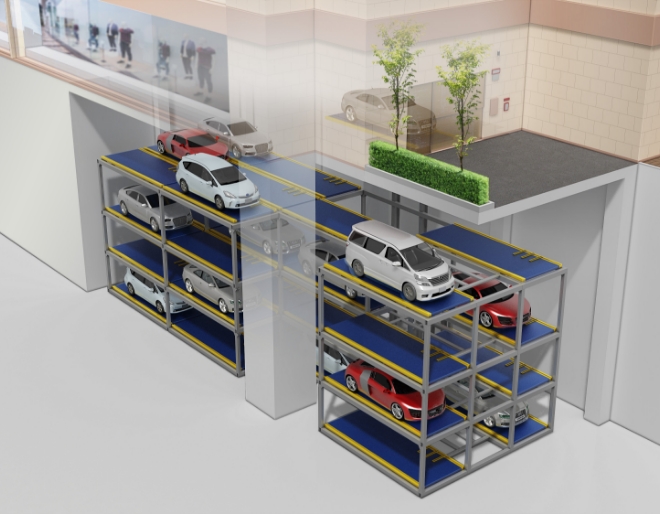
The Parking Systems Business provides integrated services for mechanical parking systems, from design, manufacturing, and installation to after-sales service and operational support.
With approximately 500,000 units installed and the largest market share in Japan, the company has established a strong business foundation. At the core of its business is an extensive portfolio of existing mechanical parking systems, accumulated through a comprehensive lineup ranging from large-scale to compact models.
Going forward, the Group will focus its resources on major metropolitan areas to expand its high-quality maintenance and lifecycle management business.
It will also respond to renewal needs arising from changes in society and operating conditions, while supporting the safe and reliable long-term use of mechanical parking systems. Through these efforts, the business will contribute to sustainable urban development by extending the use of existing systems and making efficient use of limited urban space.Underground Parking System
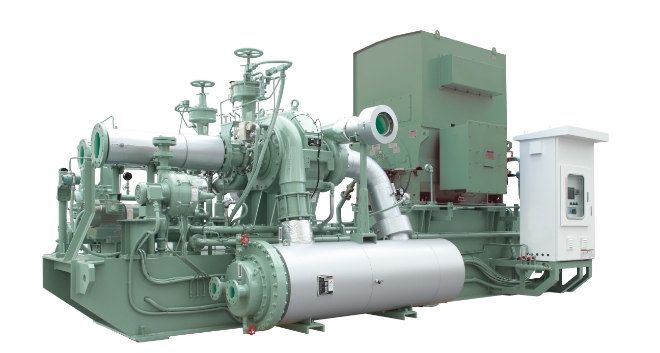
The Rotating Machinery Systems Business provides integrated engineering, manufacturing, installation, and after-sales services for compressors and other rotating machinery.
Leveraging its world-class expertise in high-speed rotating machinery, the Group delivers high-efficiency turbo technologies and advanced handling solutions that enable the safe and efficient handling of cryogenic fluids such as LNG and hydrogen. These systems have been successfully supplied to and installed for a wide range of clients.
In addition to maintenance and retrofit services for installed equipment, the Group is expanding comprehensive air audit services that assess compressed air usage across clients’ factories. These audits will enable the Group to identify optimization opportunities and recommend improvements, improving efficiency across the entire factory rather than focusing solely on individual equipment.
This integrated approach, from diagnostics and improvement proposals to maintenance support, ensures continuous service throughout the equipment's operational phase while generating long-term revenue opportunities.Process Gas Turbo Compressors
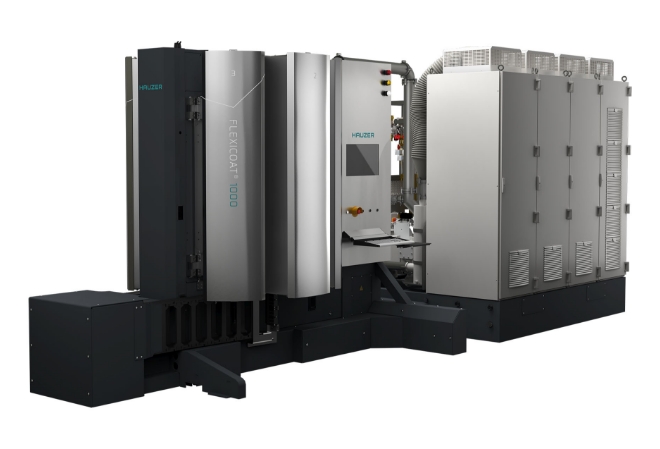
In addition to supplying heat treatment and surface engineering equipment, the IHI Group's Heat Treatment and Surface Engineering business offers contract processing services globally.
The Group operates across a diverse range of industries. Historically, the Group’s core markets have been tooling and automotive, but the Group is increasingly investing in high-growth sectors such as aerospace, decorative applications, and medical.
Through pre-order sampling support and contract processing services, the Group has accumulated optimal operational know-how.
A key strength of the IHI Group's equipment sales and contract services business is its ability to meet the needs of clients seeking the latest equipment and advanced materials.Heat Treatment & Surface Engineering Equipment
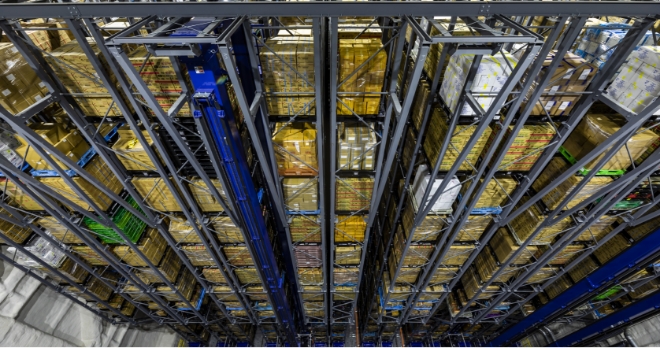
The Logistics & Industrial Systems business provides integrated services covering the design, manufacture, installation, and after-sales service of logistics systems combining automated warehouses and a wide range of material handling equipment.
The business's strengths lie in the Group’s engineering expertise that enables the Group to respond flexibly to client needs, the Group’s responsive service, and the strong client trust the Group has earned through delivering reliable quality.
In recent years, in addition to providing equipment and solutions that address the growing demand for automation and labor-saving measures, the Group has been developing systems that enable integrated management of both equipment operating status and workforce activities.
Additionally, the Group will leverage equipment data to continuously improve clients’ operations and evolve its service offerings, driving the expansion of its value-added solutions business.Automated Warehouse
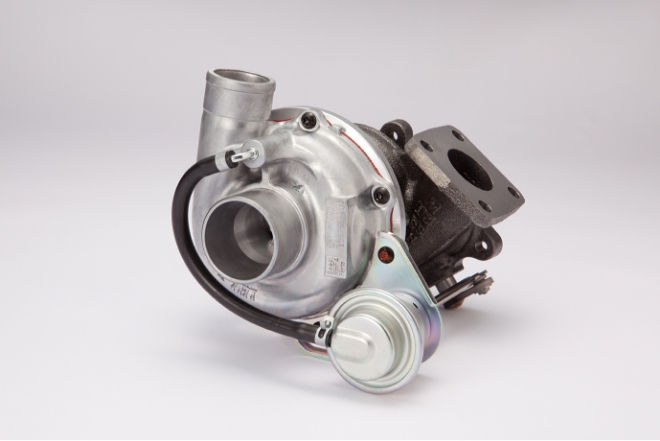
The Vehicular Turbocharger Business is engaged in the development, manufacturing, and supply of turbochargers for the automobile industry.
The Group supplies products for a wide range of vehicle models globally. The business’s strengths lie in its advanced manufacturing system capable of high-mix production and engineering capabilities to fulfill diverse client specifications.
It has also built strong partnerships with automobile manufacturers based on many years of delivery experience.
The Group will build a flexible production system responsive to changing market conditions while strengthening client relationships and focusing on enhancing the competitiveness of HEV (hybrid electric vehicle) turbochargers.
The Group is also actively expanding aftermarket sales to automakers and commercial vehicle clients (buses and trucks) who use the Group’s products over extended periods.Vehicle Turbocharger