Change
Location

Currently Using The English Site.

 
/en/technology/review_library/2025/__icsFiles/afieldfile/2025/10/22/58-2.jpg

1.Energy and Smart Technology for a Sustainable Future

Reduce CO₂ Emissions with -160°C LNG Cold Energy
Delivery of world's largest scale LNG cold power generation unit

  • IHI Plant Services Corporation

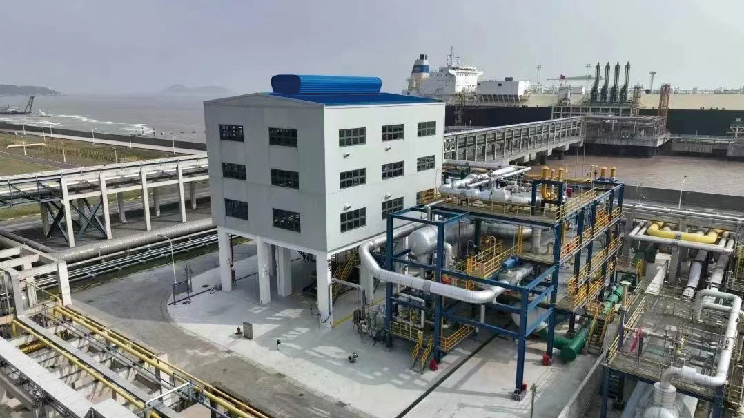
IHI Plant Services Corporation (IPC) delivered an LNG cold power generation unit to Shanghai LNG Company Ltd. in China. This unit is the first of its kind in China. Its introduction has made it possible to reduce CO₂ emissions by up to 10,000 t per year. This article presents an overview of the cold power generation project, including the specifications of the delivered unit, the knowledge obtained through the project, and the unit's operational track record.
Method for Improving Operational Efficiency Using Plant Operational Data

  • MOTEGI Yusuke, MATSUDA Kazuma, SUZUKI Yoshitaka, KAWANO Yukihiro

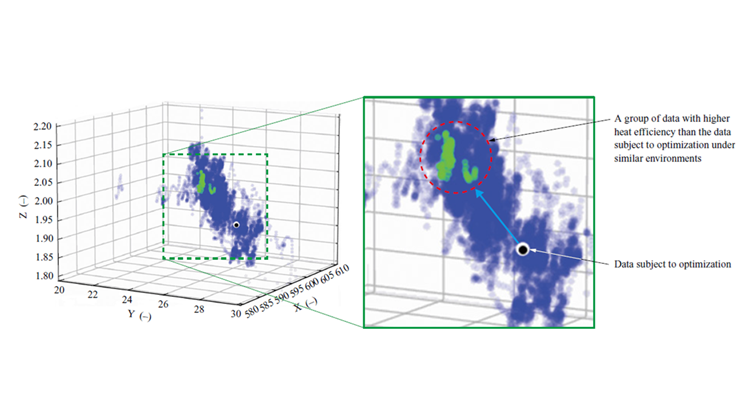
At IHI, we are working on leveraging operational data from equipment, and as part of this effort, we are also conducting data analysis using the Mahalanobis Taguchi (MT) method. The conventional MT method is predicated on the assumption that the normal state forms a single group (unit space), and it conducts a one-class classification to distinguish between "normal" and "abnormal" states. However, this approach may lead to false positives or missed detections when the "normal" state changes due to variations in operating modes, ambient temperature, or other environmental factors. To address this issue, a "Dynamic Unit Space MT Method" (hereinafter referred to as "the dynamic MT method") has been developed, which dynamically selects the appropriate normal data group according to the changing operating environment, thereby achieving high-accuracy classification even for equipment under fluctuating operating conditions. This paper describes the application of the dynamic MT method to improve the operational efficiency of power plants and production facilities, and presents validation results using simulated data.

Introduction of Demonstration Facility Utilizing a Compact Methanation System
— The Production of e-methane Utilizing CO₂ Derived from Biogas and Its First Use as a Raw Feedstock for City Gas in Japan —

  • SUWABE Masato, FUKUSHIMA Naomi, YANO Akihisa, ENDO Takumi

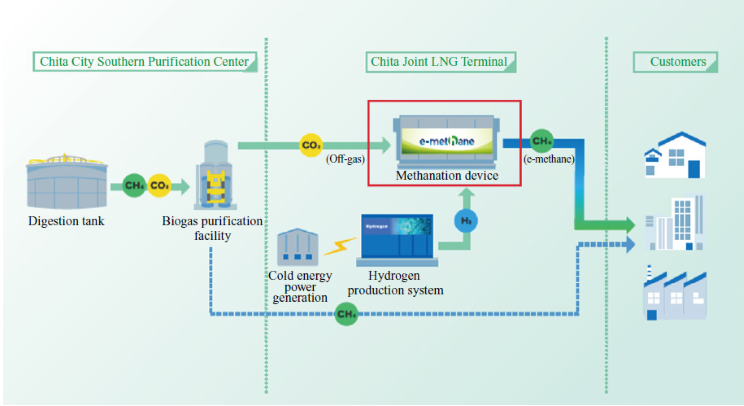
As a carbon-neutral solution, IHI Corporation is adopting the methanation technologies. IHI is expanding the sales of a Compact Methanation System (e-methane production : 12.5 Nm3/h) with the aim of promoting methanation demonstration tests by customers. In addition, IHI is also promoting the introduction of MEDICUS NAVI® system in order to remotely monitor the operating status of the facility and manage environmental value. This article introduces the construction achievements of delivering the Compact Methanation System and related equipment and implementing MEDICUS NAVI system.

2.Technological Innovation

Study on Lower-Temperature Process in Yellow Phosphorus Production from Steelmaking Slag

  • KISHIDA Takuya, MUROFUSHI Shoko, MOCHIZUKI Kyosuke

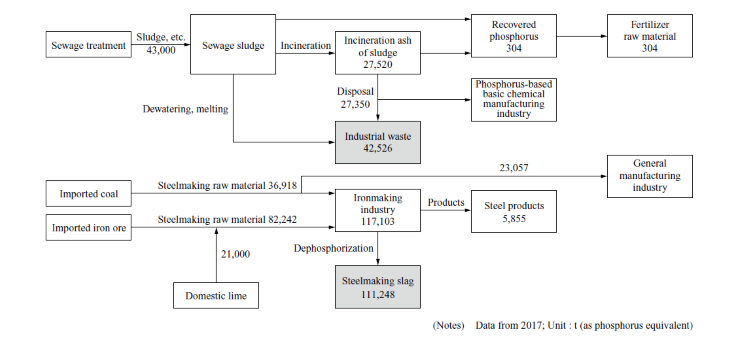
Supply of yellow phosphorus, an industrially important resource, relies entirely on imports, and its domestic production is desired for stable supply in Japan. However, there are two challenges: (1) phosphate rock, the raw material, cannot be mined domestically in Japan, and (2) recovering phosphorus from various phosphorus resources, including phosphate rock, requires enormous electrical consumption with conventional methods. To address these challenges, a method for producing yellow phosphorus at lower temperatures was investigated. This method uses steelmaking slag, the domestically largest unused phosphorus resource, as the raw material, and silicon (Si) as the reducing agent. By using Si instead of the conventional coke (C) as the reducing agent, phosphorus could be effectively recovered from the slag at a lower temperature condition of 1,273 K. Surface analysis (SEM-EDS, elemental analysis) was also conducted to study the mechanism that phosphate (P2O5) in the slag is reduced by the diffusion of Si in this lower-temperature process.

Development Status of Turbopumps for LE-9 Engine

  • MOTOMURA Taiichi, MIHARA Rei, SUZUKI Keisuke, SHIMIYA Noriyuki

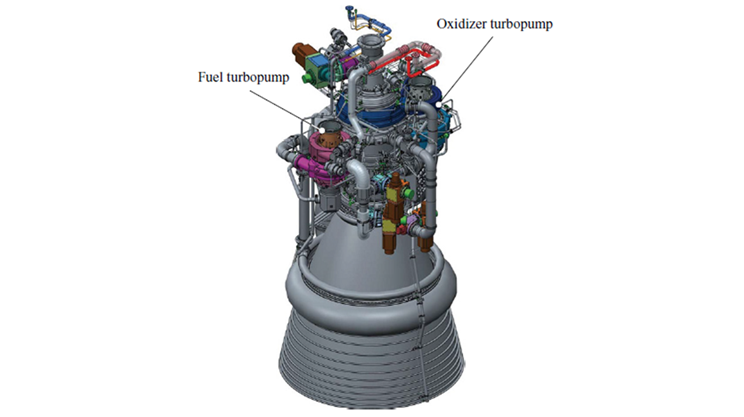
LE-9 engine is the liquid oxygen/liquid hydrogen rocket engine used for the first stage of H3 Launch Vehicle, which is under the development, aimed for the entry into the satellite launch market with the strength of the high reliability and the low cost. The development of LE-9 engine is planned to achieve the final development goal concurrently with the actual operation with the provisional specification. The H3 Launch Vehicle (H3F5 : Flight No. 5) was successfully launched in February 2025, using the LE-9 engine with the provisional specification. The expander bleed cycle is applied to the LE-9 engine instead of the staged combustion cycle used in the LE-7A engine for the H-IIA Launch Vehicle, in order to reduce production costs. Furthermore, the thrust of the LE-9 engine is almost 1.4 times that of the LE-7A engine. Therefore, the design specifications of its turbopumps are widely different and the development of the turbopumps faces the various technical problems including the blade vibration. This paper describes the specifications, the technical features, and the development status of the turbopumps for LE-9 engine.

Technology Development of Aircraft System Electrification and Hybrid Electric Propulsion

  • SEKI Naoki, HIRUMA Atsushi, KOBAYASHI Toshikazu

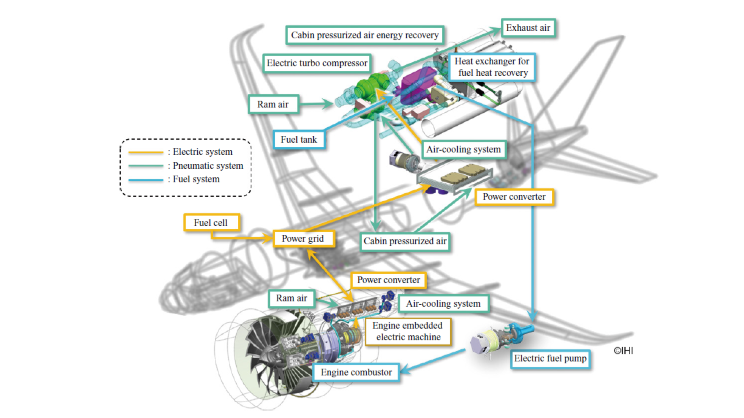
To achieve the decarbonization of air transportation in 2050, the aviation industry must pursue all options and it is essential to introduce more energy-efficient systems to air transportation. One method to improve system efficiency is electrification of the aircraft. IHI has been conducting research and development activities under the contract of New Energy and Industrial Technology Development Organization (NEDO) Green Innovation Fund Project to improve energy efficiency by applying hybrid electric propulsion and aircraft system electrification. In this paper, the concept, expected benefits, technical issues, and technical development efforts for the aircraft electrification systems in IHI, leveraging IHI's strengths in high heat resistance technology and high-speed rotating machinery technology will be presented.

Development of High Speed SiC Coating Process for CMC

  • KUBOTA Wataru, TANAKA Yasutomo, FUKUSHIMA Yasuyuki, KOTANI Masahiro

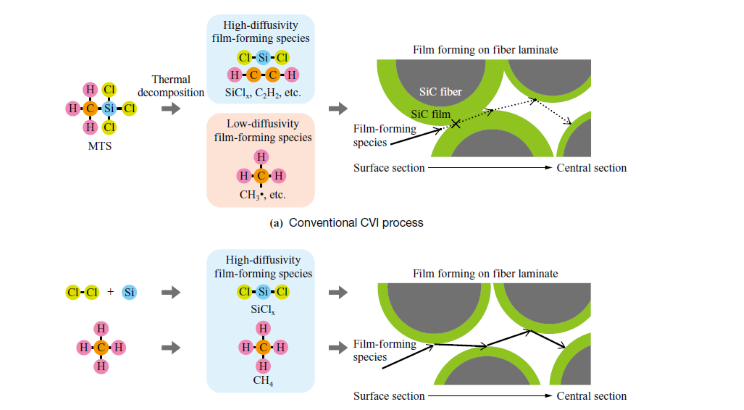
Ceramic matrix composites (CMC) are desirable for use in high-temperature components of aeroengines due to their light weight and superior high-temperature properties. The chemical vapor infiltration (CVI) process gives the SiC matrix excellent high-temperature properties, but it takes the long process time. In this study, we have developed a high-speed CVI process using a reaction mechanism different from conventional CVI and evaluated the new CVI process's functions. As a result, we established conditions that give high growth rate and coating uniformity, and achieved good results in terms of film crystallinity, film composition, and the mechanical properties of CMC.

Material Evaluation Methods with Miniature Specimen

  • NAKAHARA Yosuke, KIMURA Takahiro

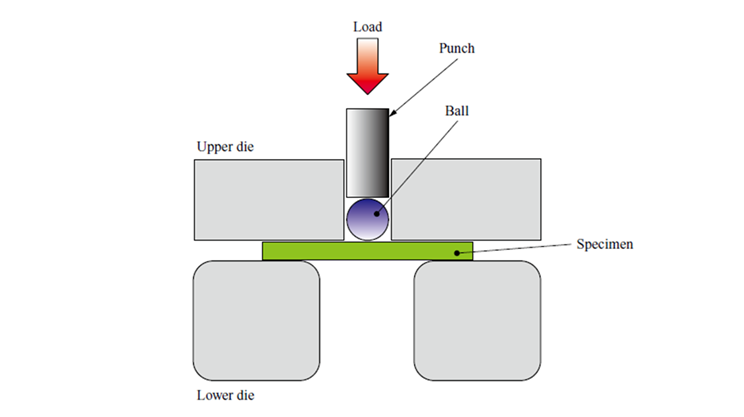
Material evaluation methods with miniature specimen, which originated in the assessment of degradation in nuclear and thermal power plants, are now applied in diverse industrial fields, including the evaluation of weld joints and biomaterials. In particular, the small punch test is relatively easy in terms of preparation from miniature specimens and is effective for evaluating various mechanical properties. This paper describes the methods, fundamental principles, and applicability of the small punch test.

Synthetic Data Generation Techniques for Visual Inspection AI Models

  • OSHIMA Takahisa, MIZUYAMA Yoshino, KITAMURA Shunya

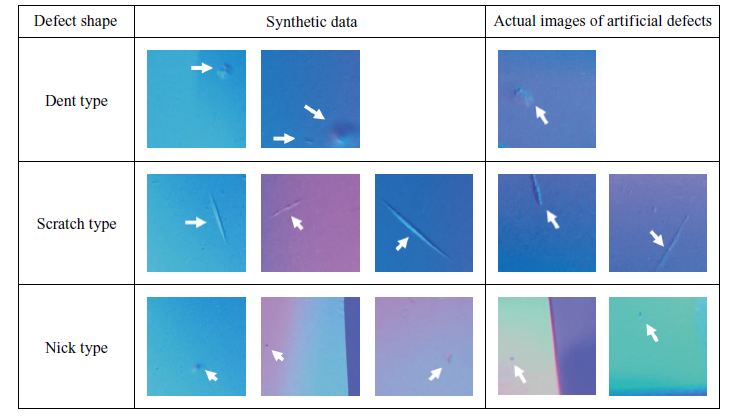
In the automation of visual inspection in the manufacturing industry, the difficulty of collecting defective product data has been a significant challenge. Recently, the use of synthetic data, which involves the artificial generation of images of defective products, has gained attention as a method to ensure a sufficient volume of data. In this study, synthetic data simulating defective metal components was generated using multiple approaches, including image processing and optical simulation. Furthermore, the usefulness of synthetic data as training data was verified by constructing an AI inspection model trained exclusively on synthetic data.