
Social Infrastructure
Bridges
IHI has constructed numerous major bridges worldwide. Included are the Seto Ohashi Bridges and the Akashi Strait Bridge in Japan, the Second Bosporus Bridge and the Golden Horn Bridge in Turkey, the Carquinez Bridge in the United States, and the Binh Bridge and the Nhat Tan Bridge in Vietnam.
-
Suspension Bridge "Osman Gazi Bridge"
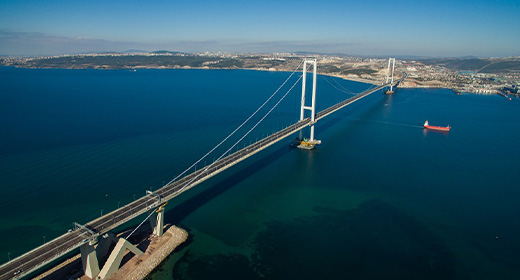
At 2,682 meters long and a center span of 1,550 meters, the Osman Gazi Bridge is the fourth longest suspension bridge in the world and has become the longest suspension bridge IHI has built overseas. IHI Group undertook the entire construction of the bridge as the single contractor and completed and opened it for traffic in June 2016.
-
Suspension bridge “Akashi Kaikyo Bridge”
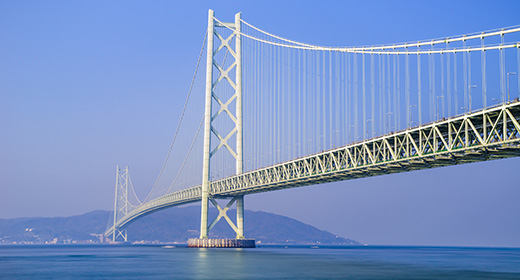
IHI fabricated and erected the main towers and girders for the Akashi Kaikyo Bridge, the suspension bridge with total length of 3,911 m and center span of 1,991 m.
-
Suspension bridge "Carquinez Bridge"
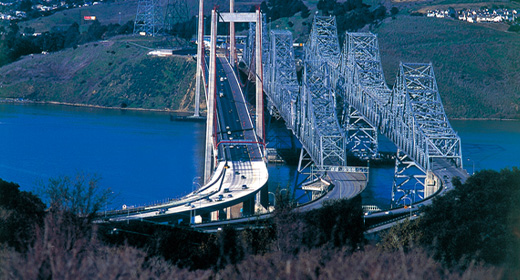
In March 2000, IHI received an order from an American joint venture company (JV) for over 10,000 metric tons of orthotropic box girders for the New Carquinez Bridge in the suburbs of San Francisco, California. This is the first long-span suspension bridge in U.S.A. in 40 years. IHI fabricated the girder at Aichi Works, and completed the delivery in March 2003. The bridge was opened to traffic in November 2003.
-
Suspension bridge “Irtysh River Bridge”
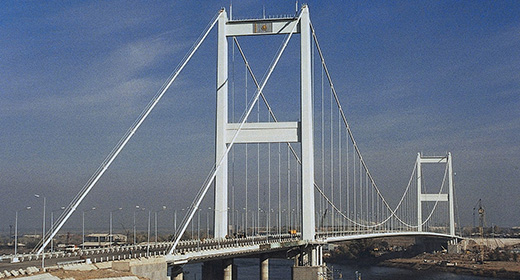
As the sole prime contractor for the Irtysh River Bridge, the longest steel suspension bridge in the former Soviet Union (total length: 1,086 m center span: 750 m), IHI completed the project 13 months ahead of schedule.
-
Cable-stayed bridge “Nhat Tan Bridge”
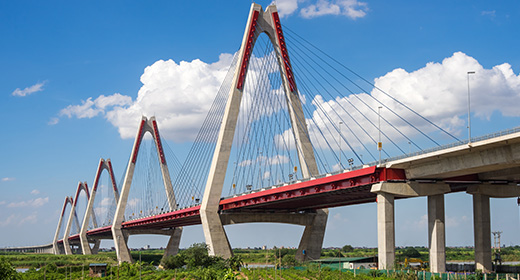
The total length 3,080-meter Nhat Tan Bridge in Hanoi, Vietnam, is a rare 6 span continuous cable-stayed bridge. IHI Group received the order for engineering, procurement and construction on the superstructure . The bridge was completed and opened to traffic in December 2014.
-
Cable-stayed bridge “Binh Bridge”
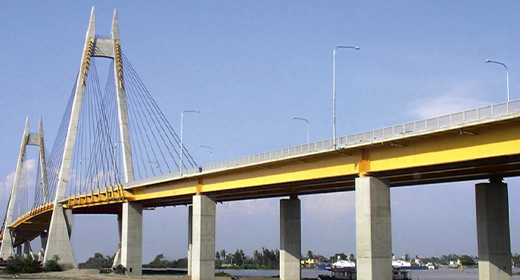
This is 17 spans continuos bridge, including a cable-stayed bridge with its length of 1,280m, in Haiphong, Vietnam. IHI constructed the bridge comprehensively including roads and base construction.
-
Rigid-frame bridge
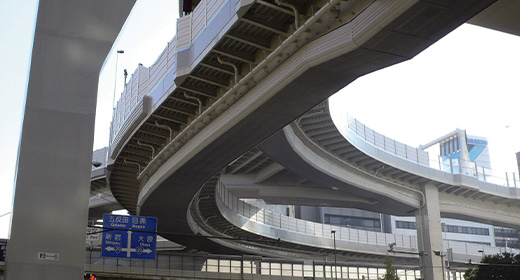
This is the common structure in city highways that combines piers and beams. The photo shows Nishi Shinjuku Junction of Metropolitan Expressway, which is typical bridge with complex structure in city area junctions.
-
Girder bridge
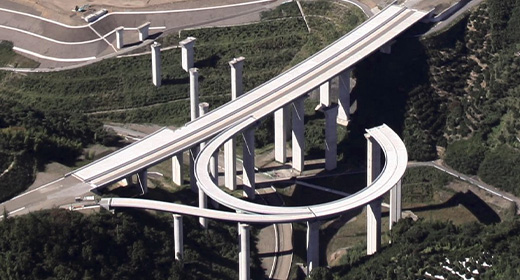
This is a structural form, aiming for reducitonof construction cost, consists of main girders and floor slabs to support roads. The photo shows Isabu Interchange in Shizuoka City that consists of continuous composite plate girder bridges and continuous box girder bridges placed on the connection road between Tomei Expressway and New Tomei Expressway.
-
Pedestrian bridge
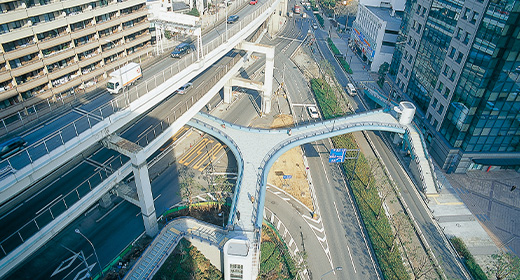
Our pedestrian bridges can fulfil a function as regional landmarks designed to blend in with urban landscapes.
-
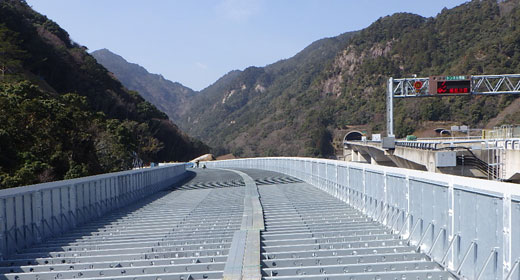
IHI produces steel-concrete composite floor system consisting of bottom steel plates, channel steel reinforcements, and stud dowels. This floor system can flexibly deal with longer spans. Since the bottom steel plate serves as the framework, it excels in terms of safety and construction capability and helps shorten the construction period.
Composite slabs
-
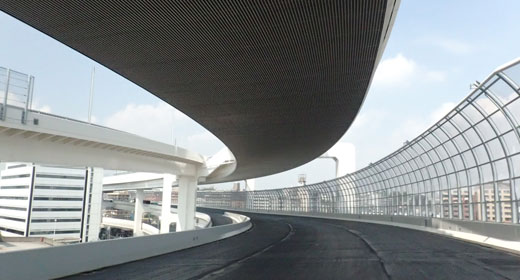
Sound-absorbing panels for the underside of elevated roads and noise barriers. The sound-absorbing panels for the underside of elevated roads were developed to limit the increase of reflection noise from the underside of elevated roads, while the sound isolating boards were developed to reduce noise at construction sites.
Sound-absorbing panels for the traffic noise under the elevated roads and noise barriers
-
Temporary assembling bridge “TRIAS”
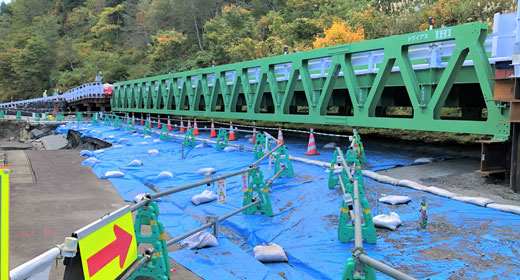
“TRIAS” is the all-purpose temporary assembling bridges that provides excellent solution when swift and cost-effective construction is required. As emergency bridges, they can be easily constructed on any site conditions within a short time and have sufficient capacity for heavy vehicles.
They come in “plate girder” and “truss” types and can be used for various purposes, including disaster recovery, scaffold board for construction and so on.
Watergates
IHI is Japan's top manufacturer of water gates for rivers and dams. Our capabilities extend from manufacturing and installation to inspection and maintenance. We contribute to water usage and flood control projects in Japan and overseas, particularly in Southeast Asia.
-
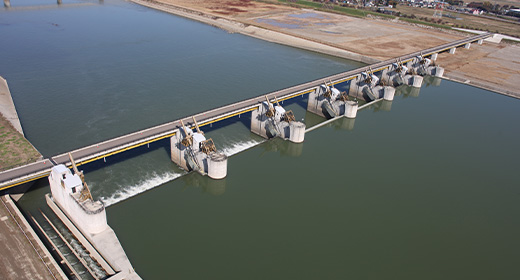
A gate leaf is mainly made up by plate-girders. Hydraulic load acting on the gate leaf is transmitted to the anchorage through wheels. This gate has multiple wheels to reduce the rotating friction in operation.
Girder-type fixed wheel gates
-
Shell-type fixed wheel gates
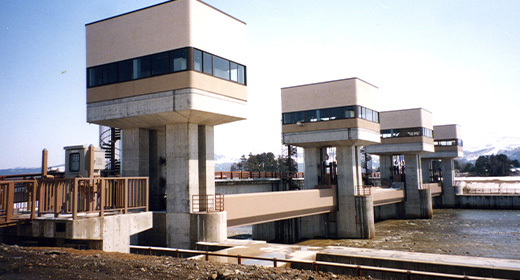
A gate leaf is mainly made up by the box-girder.
Hydraulic load acting on the gate leaf is transmitted to the anchorage through wheels.
This gate has multiple wheels to reduce the rotating friction in operation.
The gate is used extensively for weir gate. -
Flap gates
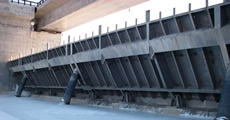
The flap gate has hinges on the lower part of the gate leaf.
It is often used to control the upstream water level.
The gate is used extensively for weir gate. -
Rising sector gates
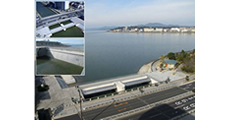
This gate is operated (open and close) by rotating the discoid structure at the edge of the gate leaf.
The center part of gate leaf is mainly made up by the shell structure. -
Other hydraulic gates
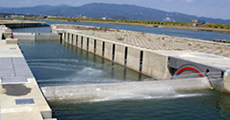
There are various types of gates, such as miter gate which is like a hinged double door.
-
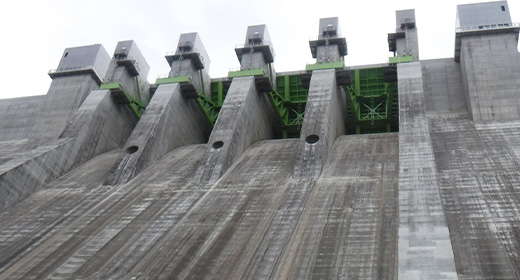
The crest gate is installed at the crest of the dam. The gate is used for emergency flood control of the dam to avoid overflow from the crest.
Crest gates
-
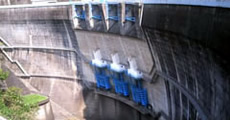
The wheel gate installed at the high pressure outlet equipment.
High pressure fixed wheel gates
-
High pressure radial gates
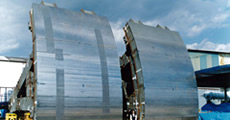
The radial gate is installed at the high pressure outlet equipment.
The gate has a large capacity of discharge under the high water pressure for flood control of the dam by discharging excessive inflow. -
Intake facility(Selective water withdrawal facility)
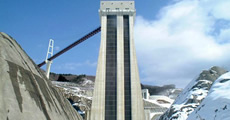
This facility can take water at any depth of the reservoir.
As well as telescope type cylindrical gate, there is a wide variety of the hydraulic gate.
Shields
IHI developed the world’s largest shield and rotating shield tunneling machines, which have greatly improved construction efficiency.
-
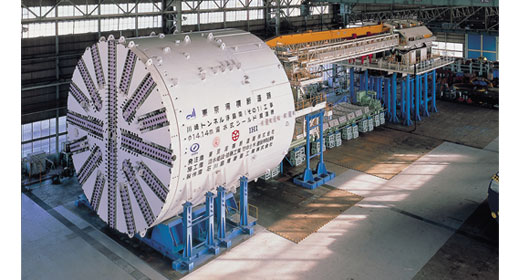
IHI has supplied many large-diameter shield machines, including the one used in the construction of the Tokyo Bay Aqualine tunnel.
Large-diameter shield tunneling machine
-
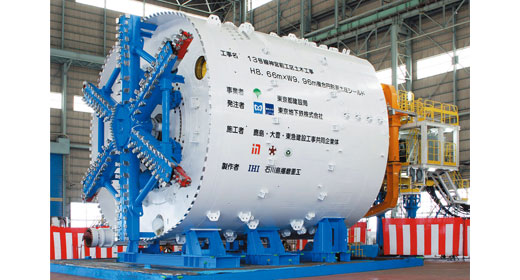
Non-circular cross sections, such as in the double track sections of subways, can be tunneled efficiently by extending the ends of the spokes of the cutters according to the rotation.
Combination circular shield tunneling machine
-
Horizontal Multiple-micro shield tunneling machine
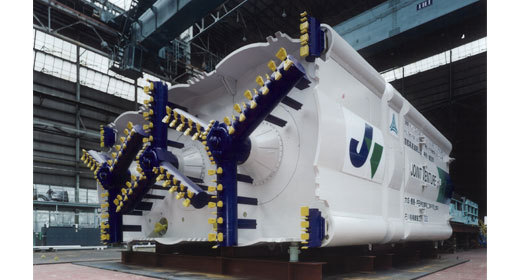
This shield machine, used in the construction of box-shaped large-section tunnels such as road tunnels, can be flexibly adapted to any section shape.
-
Double-O tube shield machine
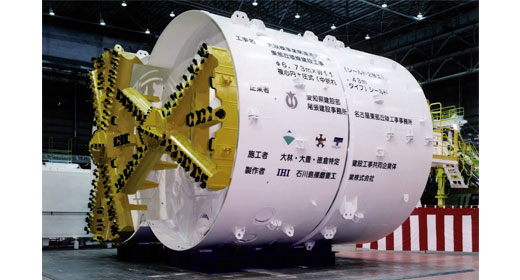
This shield tunneling machine drills inbound and outbound lanes at a time, for example, for subways.
This machine provides economic advantages with shortened construction time and reduced drilling soil volume and is employed in foreign countries as well. -
Rotating shield tunneling machine
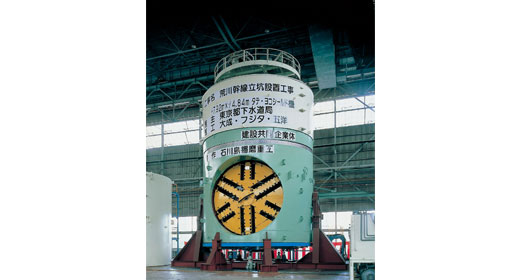
Single machine can excavate shaft from the ground, and continuously tunnel by right angles. IHI's new technology developed through joint research with users.
-
Upward-facing shield tunneling machine
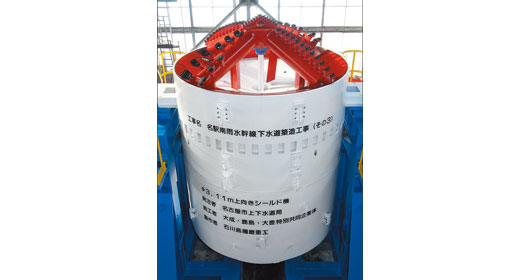
This shield tunneling machine tunnels upwards from an existing tunnel towards the surface. This minimizes the affect on the surface during construction of a tunnel, so that it is more friendly to the environment.
-
Rectangular type shield tunneling machine
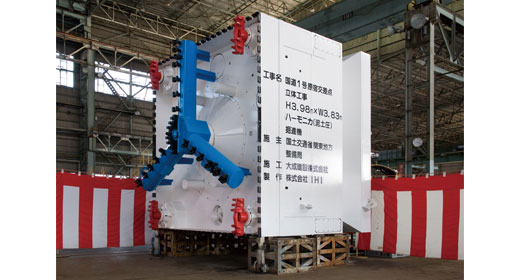
This shield tunneling machine is used, for example, to construct grade-separating tunnels to solve congestion at the intersections or busy railroad crossings. It drills a large section by repeatedly moving back and forth between start and drilling locations.
-
Automatic segment assembling system
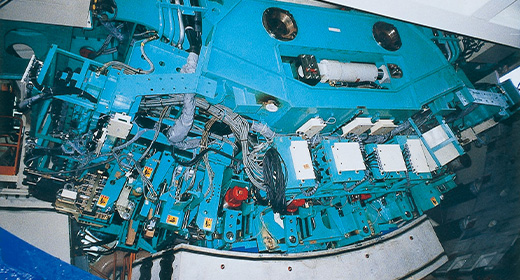
IHI mechatronic technology has substantially improved tunneling efficiency and safety
through the automated assembly of segments for tunnel walls.
Security
IHI provides various products based on mechatronics and sensing technologies. IHI 3D Laser radar is applied to Railway level crossing obstacle detection system. It has achieved over 2,000 units supply record over the world and been exploring for other sensing business fields. IHI also supplies X-ray visual inspection system for large size cargo container, for which IHI is the domestic market leader. We have ample track record for airports and seaports custom check including small and midsized X-ray inspection system.
-
3D laser radar
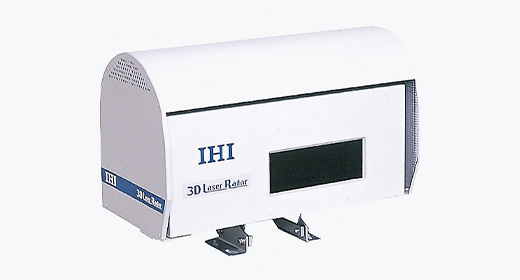
3D laser radar detects the location and movement of every object in real-time independent of light and weather, even at night and in bad weather.
Many 3D laser radars were introduced as level crossing obstacle detection systems over the world.
In addition, application to various fields is possible such as object recognition by the robotic eye in poor environments, invasion monitoring of important institutions and soundness diagnosis of structural objects. -
Large X-ray inspection system
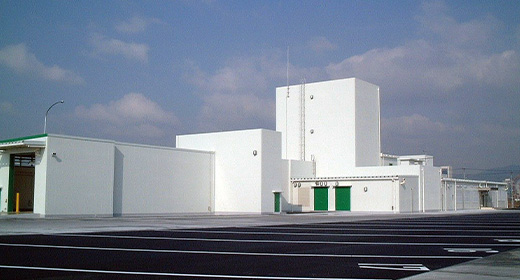
This inspection device conducts horizontal and vertical X-ray inspections on container cargos as part of imported / exported cargo customs examination. This device can conduct high-penetration, high-resolution imaging tests and capable of identifying object materials.
-
Medium and small X-ray inspection system
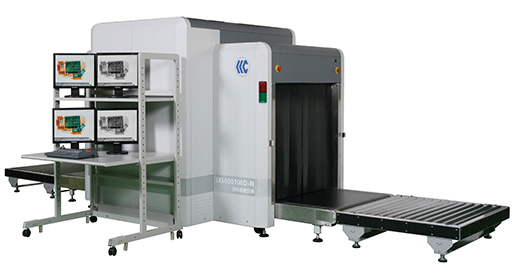
IHI provides various types of X-ray inspection devices such as devices that can vary X-ray output in accordance with examined objects or devices capable of identifying object materials.
-
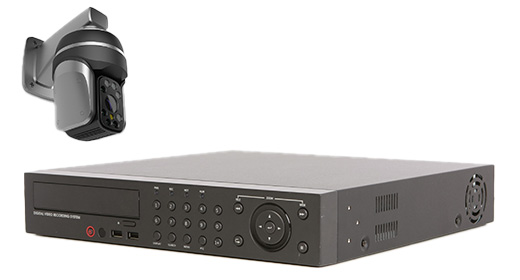
A high cost-performance digital video recorder for monitoring. High resolution recording up to 16 channels simultaneously. Able to view 16 channels on a monitor simultaneously. Motion sensor recording and email alerts through events are possible.
Digital video recorder “FineREC®”
-
Oil leak monitor
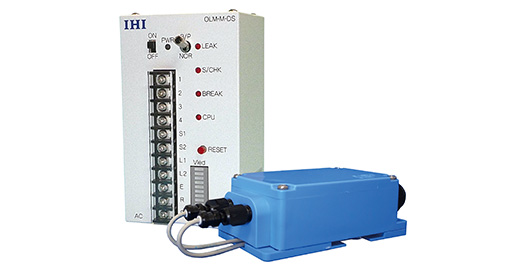
A high-performance oil detector adopting an optical fiber in its sensor.
Oil particles which adhere to the sensor are detected by the fastest for 12 seconds.
There is also a floating type available for use on water. -
Vibration control systems
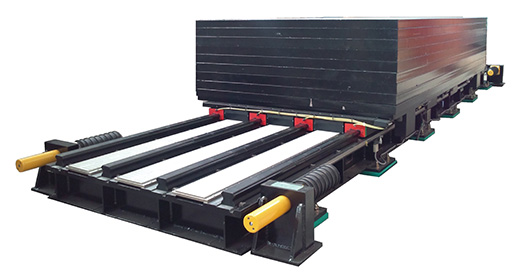
Vibration control systems are installed on high-rise buildings, the main towers of suspension or cable-stayed bridges to reduce vibratory motion caused by wind and post-earthquake tremors. The use of linear motors helps boost power and speed to fit in next-generation super high-rise buildings where long-period ground motion will be generated.
-
Seismic isolation floor systems
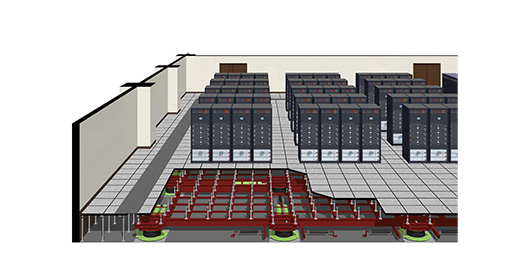
Seismic isolation floor systems are installed in computer rooms, etc., to minimize damage caused by massive earthquakes.
The 3D sliding-type seismic isolation floor systems are capable of absorbing both horizontal and vertical seismic vibration, and will remain to fulfill function, even when epicentral earthquake occurs.